 Elsa Addison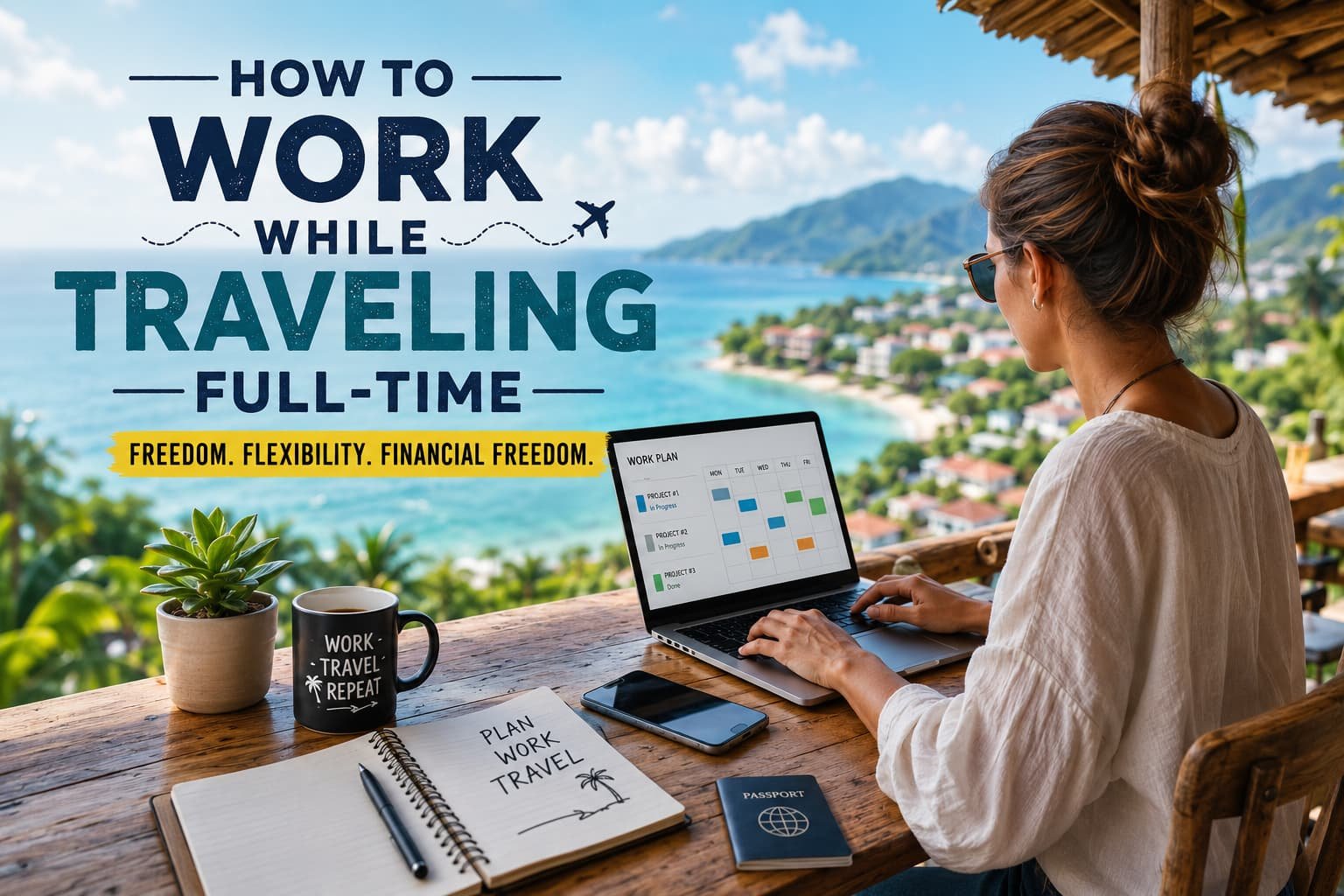
A few years ago, the idea of working while traveling full-time sounded almost impossible to me.
Like many people, I assumed that constant travel meant unreliable internet, missed deadlines, and a career that would eventually fall apart. I pictured myself trying to join video meetings from noisy cafés while struggling to find Wi-Fi strong enough to send a simple email.
I was skeptical at first, but after researching how successful remote workers operate and testing many of these strategies myself, I realized that working while traveling full-time is not only possible—it can be incredibly rewarding when done correctly.
Today, thousands of professionals run businesses, manage clients, work corporate remote jobs, and build freelance careers while exploring different countries and cities. The key isn’t working harder. It’s creating systems that allow you to stay productive no matter where you are.
In this guide, I’ll share practical lessons, tools, strategies, and real-world insights that can help you successfully work while traveling full-time without sacrificing your income, career growth, or personal well-being.
How to Work While Traveling Full-Time
Working while traveling full-time requires balancing three important factors:
- Reliable income
- Consistent productivity
- Flexible travel planning
Many people focus only on the travel aspect and forget that work still needs to come first.
In my experience, the most successful digital nomads treat travel as a lifestyle enhancement—not as a permanent vacation.
Once I shifted my mindset from “traveling while occasionally working” to “working while enjoying travel,” everything became much easier.
Choose the Right Type of Remote Work
Not every job works well with constant travel.
Before booking flights and planning long-term trips, evaluate whether your current work can realistically support a mobile lifestyle.
Remote Employment
Many companies now hire fully remote employees.
Popular remote-friendly industries include:
- Software development
- Marketing
- Graphic design
- Customer support
- Project management
- Content writing
- Data analysis
Companies like:
- GitLab
- Automattic
- Shopify
- Buffer
have become well-known for supporting distributed teams.
The advantage is predictable income and benefits.
The downside is less schedule flexibility.
Freelancing
Freelancing offers more freedom but requires finding clients consistently.
Popular freelance platforms include:
- Upwork
- Fiverr
- Freelancer
- Toptal
Common freelance services include:
- Writing
- Web design
- SEO consulting
- Video editing
- Social media management
Freelancing often works best for travelers who want control over their schedules.
Online Business Ownership
Many travelers eventually build:
- Blogs
- E-commerce stores
- Online courses
- Coaching businesses
- Affiliate marketing websites
While these models take longer to build, they can provide significant flexibility over time.
See More: How to Travel on a Budget Without Missing Experiences
Build a Reliable Mobile Office
One lesson I learned quickly is that your laptop alone is not enough.
A reliable mobile office can make the difference between smooth productivity and constant frustration.
Essential Equipment
My recommended setup includes:
- Lightweight laptop
- Noise-canceling headphones
- Portable mouse
- Backup power bank
- Universal travel adapter
- Portable SSD drive
- Smartphone hotspot capability
A quality setup prevents many common travel work problems.
Internet Backup Strategy
Never depend on a single internet connection.
I always try to have:
- Accommodation Wi-Fi
- Local SIM card with data
- Phone hotspot backup
This simple approach has saved me multiple times when hotel internet suddenly stopped working before important meetings.
Master Time Zone Management
Time zones are one of the biggest challenges for full-time travelers.
When I first started working remotely while traveling, I underestimated how complicated scheduling could become.
After accidentally joining one meeting an hour late, I developed a much better system.
Best Practices for Managing Time Zones
Use Scheduling Tools
Helpful tools include:
- Google Calendar
- Calendly
- World Time Buddy
These tools automatically convert meeting times.
Establish Core Working Hours
Many remote workers maintain a fixed work window.
For example:
- 9 AM to 1 PM client hours
- Flexible project work afterward
This creates predictability for clients and coworkers.
Communicate Availability Clearly
Always let clients and teammates know:
- Your current time zone
- Response expectations
- Working hours
Clear communication prevents misunderstandings.
Create a Travel Schedule Around Work
One mistake new digital nomads often make is moving too frequently.
Changing cities every few days may sound exciting, but it can seriously affect productivity.
Slow Travel Works Better
In my experience, staying in one location for several weeks provides major advantages:
- Better routines
- More stable internet
- Lower costs
- Less travel fatigue
- Improved focus
Instead of visiting ten cities in one month, I often recommend spending an entire month in one destination.
Many experienced travelers call this approach “slow travel.”
Productivity Strategies That Actually Work
Productivity becomes even more important when you’re constantly surrounded by new places and experiences.
The temptation to explore instead of work is always there.
Time Blocking
Time blocking helps separate work from sightseeing.
For example:
Morning:
- Client work
- Meetings
- Deep focus tasks
Afternoon:
- Explore the city
- Visit attractions
- Relax
This structure prevents work from consuming your entire trip.
Prioritize Deep Work
Author Cal Newport popularized the concept of deep work.
This means dedicating uninterrupted time to important tasks.
I personally try to complete my highest-value work before checking social media or planning travel activities.
The difference in productivity is remarkable.
Budgeting for Full-Time Travel and Work
Financial stability is critical.
Many aspiring digital nomads focus on destinations but ignore budgeting.
A simple monthly framework includes:
Fixed Expenses
- Insurance
- Software subscriptions
- Business expenses
- Savings contributions
Travel Expenses
- Accommodation
- Flights
- Transportation
- Food
Emergency Fund
I strongly recommend maintaining at least three to six months of living expenses.
Unexpected situations happen:
- Flight cancellations
- Medical emergencies
- Equipment failures
- Client loss
An emergency fund creates peace of mind.
Best Tools for Working While Traveling
The right tools can significantly improve your experience.
Communication
- Slack
- Zoom
- Microsoft Teams
Project Management
- Trello
- Asana
- ClickUp
- Monday.com
File Storage
- Google Drive
- Dropbox
- OneDrive
Password Security
- 1Password
- LastPass
- Bitwarden
VPN Services
Popular VPN providers include:
- NordVPN
- ExpressVPN
- Surfshark
A VPN helps protect your data when using public Wi-Fi networks.
Common Challenges and How to Solve Them
Even experienced travelers face obstacles.
Here are some of the most common issues.
Poor Internet
Solution:
- Research accommodation reviews carefully.
- Use coworking spaces.
- Maintain a hotspot backup.
Loneliness
Solution:
- Join coworking communities.
- Attend local events.
- Participate in digital nomad meetups.
Burnout
Solution:
- Schedule rest days.
- Avoid overworking.
- Create boundaries between work and travel.
Lack of Routine
Solution:
Develop consistent habits:
- Morning exercise
- Dedicated work hours
- Weekly planning sessions
Small routines create stability regardless of location.
Real-World Example of a Sustainable Digital Nomad Routine
One routine I’ve seen work repeatedly looks like this:
Monday–Friday
Morning:
- Deep work
- Client meetings
- Project tasks
Afternoon:
- Explore local attractions
- Exercise
- Networking
Evening:
- Relaxation
- Reading
- Planning
Weekends
- Day trips
- Cultural experiences
- Personal projects
This structure allows work and travel to complement each other instead of competing for attention.
Lessons I Learned Working While Traveling Full-Time
Looking back, several lessons stand out.
Freedom Requires Structure
Ironically, more freedom often requires better planning.
Reliable Internet Is More Valuable Than Luxury
A basic apartment with excellent internet usually beats a luxury hotel with unreliable connectivity.
Travel Is Better When Work Is Under Control
The most enjoyable travel experiences happen when deadlines are completed and responsibilities are handled.
Sustainability Beats Speed
Traveling slower often leads to richer experiences and better work performance.
FAQs
1. Can I work remotely while traveling internationally?
Yes. Many remote employees, freelancers, and business owners work internationally. However, you should always verify visa requirements, tax obligations, and employer policies before traveling.
2. How much money do I need to travel full-time and work remotely?
The amount varies by destination and lifestyle. Many travelers aim to maintain at least three to six months of emergency savings in addition to covering monthly living expenses.
3. What is the biggest challenge of working while traveling?
For most people, the biggest challenges are maintaining productivity, managing time zones, and avoiding burnout. Establishing routines and using reliable tools can solve most of these issues.
Quick Tips for Working While Traveling Full-Time
- Always have an internet backup.
- Travel slower than you think you need to.
- Protect your work with cloud backups.
- Use scheduling tools for time zones.
- Prioritize work before sightseeing.
- Maintain an emergency fund.
- Create consistent daily routines.
- Invest in quality equipment.
Conclusion
Working while traveling full-time is one of the most rewarding lifestyles available today, but it requires more planning than social media often suggests. The people who succeed are not necessarily the most adventurous travelers—they are the ones who build reliable systems, maintain discipline, and treat their work seriously.
In my experience, the secret is finding the balance between exploration and responsibility. When your work processes are organized, your internet is reliable, and your schedule is under control, travel becomes far more enjoyable.
Start small, test your systems, refine your routine, and focus on sustainability rather than constant movement. With the right approach, you can build a career that supports both professional success and the freedom to explore the world on your own terms.

 Mark Jones
 Michael Nelson