 Elsa Addison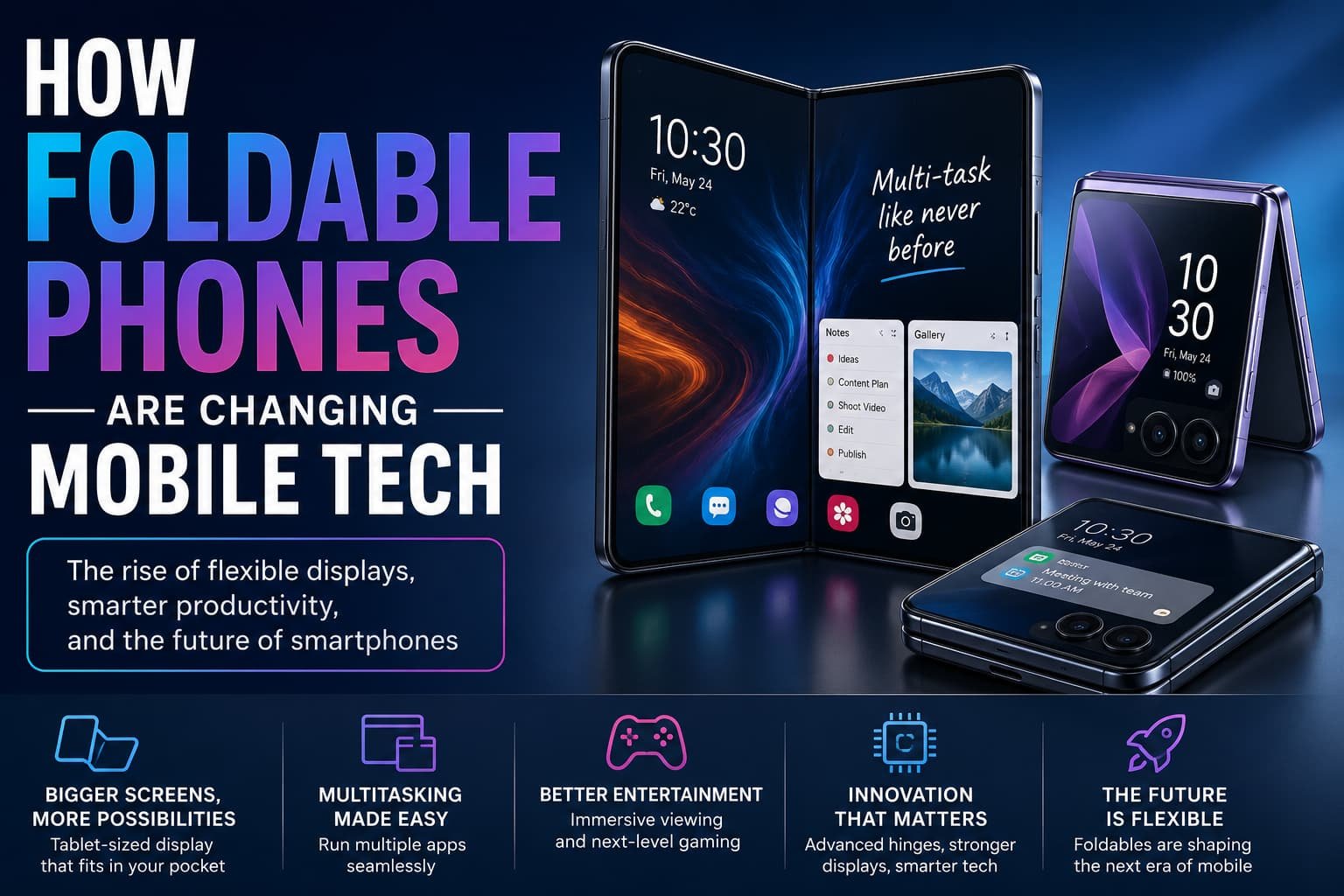
Foldable phones once felt like something straight out of a sci-fi movie. I still remember the first time I saw one in person. A friend unfolded his phone like a tiny book, and my immediate reaction was, “Wait… that’s a phone?” Fast forward a few years, and foldable smartphones have evolved from experimental gadgets into some of the most innovative devices in the mobile industry.
Today, companies like Samsung, Google, Huawei, Motorola, and OnePlus are pushing foldable technology further than many people imagined possible.
But are foldable phones just a flashy trend, or are they genuinely changing mobile technology?
After researching the latest devices, comparing user experiences, and spending time with foldable phones myself, I believe they’re doing much more than creating buzz. They’re reshaping how we interact with smartphones, productivity apps, entertainment, and even mobile hardware design.
In this guide, we’ll explore how foldable phones are changing mobile tech, the advantages and challenges they bring, and what the future may look like.
The Rise of Foldable Smartphones
The smartphone market had become somewhat predictable.
Each year brought:
- Slightly better cameras
- Faster processors
- Brighter displays
- Bigger batteries
While these improvements were useful, they weren’t revolutionary.
Foldable devices changed that.
Instead of simply improving existing designs, manufacturers introduced entirely new form factors that transformed how users interact with mobile devices.
Read More: How to Choose a Laptop for Work and Gaming
What Is a Foldable Phone?
A foldable phone uses flexible OLED display technology that allows the screen to bend without breaking.
The most common designs include:
Book-Style Foldables
Examples include:
- Samsung Galaxy Z Fold Series
- Google Pixel Fold
- OnePlus Open
These devices open like a book and provide a tablet-sized display.
Flip-Style Foldables
Examples include:
- Samsung Galaxy Z Flip Series
- Motorola Razr
These prioritize portability by folding into a compact form.
Why Foldable Phones Matter
Foldables aren’t just different-looking phones.
They solve real-world problems.
Bigger Screens Without Bigger Pockets
One of the biggest frustrations with traditional smartphones is the tradeoff between screen size and portability.
Many users want:
- Larger displays
- Easier multitasking
- Better video viewing
But carrying a tablet everywhere isn’t practical.
Foldables bridge that gap.
When I tried a foldable device for the first time, what surprised me most wasn’t the folding mechanism—it was how quickly I adapted to the larger screen. Reading articles, reviewing documents, and watching videos felt significantly more comfortable.
How Foldable Phones Are Changing Productivity
Perhaps the biggest impact foldable phones are having is in mobile productivity.
True Multitasking
Traditional smartphones often feel cramped when juggling multiple apps.
Foldable devices allow:
- Split-screen workflows
- Multiple app windows
- Drag-and-drop functionality
- Improved document editing
For example, I could keep an email open on one side while reviewing a spreadsheet on the other.
That experience felt much closer to using a laptop than a smartphone.
Business Professionals Benefit Most
Professionals frequently use:
- Microsoft Office
- Google Workspace
- Slack
- Zoom
- Notion
A larger foldable display creates a more efficient workspace without carrying additional devices.
Entertainment Gets a Major Upgrade
Foldable technology is also transforming mobile entertainment.
Better Video Streaming
Watching content on:
- Netflix
- YouTube
- Disney+
- Amazon Prime Video
becomes far more immersive on a larger display.
The difference is especially noticeable during travel.
Instead of watching a movie on a narrow smartphone screen, users essentially get a mini tablet experience.
Improved Mobile Gaming
Mobile gaming has exploded in popularity.
Foldables offer:
- Larger visuals
- Better touch controls
- More immersive gameplay
Games that once felt crowded on standard phones suddenly have room to breathe.
Foldables Are Driving Hardware Innovation
Foldable phones aren’t just changing devices, they’re forcing the entire industry to innovate.
Display Technology Has Advanced Rapidly
Flexible OLED displays have improved dramatically.
Manufacturers have reduced:
- Creasing
- Screen fragility
- Thickness
- Power consumption
Each new generation brings stronger materials and more refined designs.
New Hinge Engineering
The hinge is arguably the most impressive part of a foldable phone.
Modern hinge systems now support:
- Hundreds of thousands of folds
- Improved durability
- Better water resistance
- Multiple viewing angles
These engineering breakthroughs could eventually influence other consumer electronics categories.
Real-World Use Cases for Foldable Phones
Many people ask whether foldable phones actually improve daily life.
The answer depends on how you use your device.
For Content Creators
Content creators can:
- Edit photos
- Review videos
- Manage social media
- Monitor analytics
with greater ease.
The larger display creates a more efficient mobile workstation.
For Frequent Travelers
Travelers benefit from:
- Compact portability
- Entertainment on the go
- Easier navigation
- Better productivity during flights
A foldable can replace the need to carry both a phone and tablet.
For Students
Students can:
- Read digital textbooks
- Take notes
- Research topics
- Participate in online classes
all from one device.
Common Problems with Foldable Phones
Despite their advantages, foldables aren’t perfect.
Higher Prices
The biggest obstacle remains cost.
Premium foldable phones often cost significantly more than traditional flagship devices.
For many buyers, this creates hesitation.
I was skeptical at first, but after spending time with a foldable, I better understood where that extra cost comes from. The engineering involved is genuinely impressive.
Durability Concerns
Some users worry about:
- Screen damage
- Hinge wear
- Dust exposure
Fortunately, newer generations have become far more durable than early models.
App Optimization Challenges
Not every app is fully optimized for foldable displays.
While major apps work extremely well, occasional compatibility issues still appear.
Thankfully, software support improves every year.
How Foldable Phones Compare to Traditional Smartphones
Traditional Smartphones
Advantages:
- Lower prices
- Simpler design
- Proven durability
- Wider app compatibility
Foldable Smartphones
Advantages:
- Larger displays
- Better multitasking
- Enhanced entertainment
- Unique user experience
After comparing foldable devices with my previous smartphone, I found myself reaching for the foldable more often when working, reading, or consuming media.
The extra screen space quickly became difficult to give up.
The Future of Foldable Technology
The foldable market is still relatively young.
Many experts believe the next decade will bring even more innovation.
Rollable and Expandable Displays
Several manufacturers are exploring:
- Rollable screens
- Stretchable displays
- Expandable form factors
These concepts could take flexibility beyond simple folding.
Improved Battery Technology
Future foldables will likely benefit from:
- Faster charging
- Longer battery life
- More efficient components
More Affordable Devices
As manufacturing scales, prices will likely decrease.
This could make foldable phones accessible to a much broader audience.
Tips Before Buying a Foldable Phone
If you’re considering a foldable device, keep these factors in mind.
Choose Based on Your Usage
Ask yourself:
- Do you multitask frequently?
- Do you watch lots of videos?
- Do you travel often?
- Do you need tablet-like functionality?
If the answer is yes, a foldable may be worth considering.
Check Software Support
Look for brands with strong update policies and optimized software experiences.
Visit a Store First
Pictures don’t fully capture the experience.
Try opening, closing, and using a foldable in person before making a decision.
Quick Takeaways
If you’re short on time, here’s the summary:
- Foldable phones combine smartphone portability with tablet productivity.
- They significantly improve multitasking and entertainment.
- Flexible display technology is advancing rapidly.
- Prices remain high but continue to improve.
- Foldables are influencing the future direction of mobile innovation.
Frequently Asked Questions
Are foldable phones worth buying?
For users who value multitasking, larger screens, and cutting-edge technology, foldables can offer significant benefits. Casual users may still find traditional smartphones more cost-effective.
How durable are foldable phones?
Modern foldables are much more durable than earlier generations. Improved hinges, stronger displays, and better materials have significantly increased reliability.
Do foldable phones replace tablets?
For many users, yes. Book-style foldables provide a large-screen experience that can reduce the need for carrying a separate tablet.
Will foldable phones become mainstream?
Industry trends suggest foldables will continue gaining popularity as prices decrease and technology improves.
Final Thoughts
Foldable phones represent one of the most exciting developments in modern mobile technology. They aren’t simply new gadgets, they’re redefining what a smartphone can be.
In my experience, the biggest advantage isn’t the novelty of folding the screen. It’s the flexibility. One moment you have a compact phone in your pocket, and the next you have a device capable of handling productivity, entertainment, and creativity on a much larger scale.
While foldables still face challenges such as cost and durability concerns, their rapid evolution suggests they’re here to stay. As hardware improves and prices become more competitive, foldable devices may eventually become as common as traditional smartphones.