 Mark Jones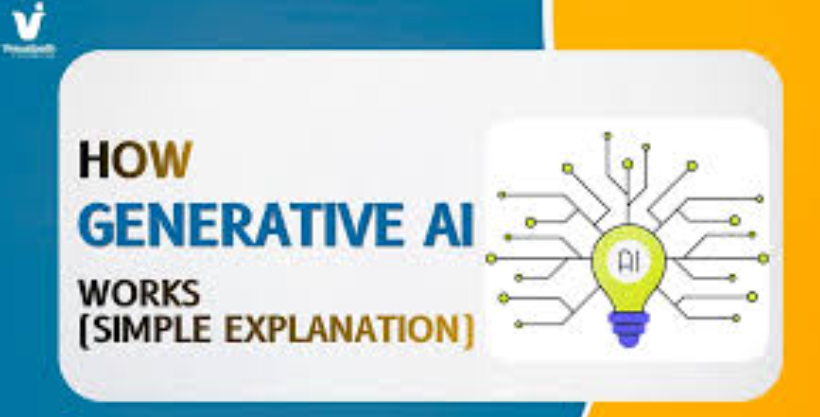
Artificial intelligence is rapidly transforming the digital world, but one branch is receiving more attention than almost any other technology today: Generative AI. From creating realistic images and videos to writing essays, music, and software code, generative is redefining how humans create and interact with technology.
Overview
Generative AI (GenAI) is a type of artificial intelligence that can create new, original content—such as text, images, music, or computer code—by learning patterns from massive amounts of existing data. Unlike traditional AI, which analyzes existing data to classify or identify it, Generative AI uses those patterns to produce something entirely new that resembles the training data but is not a direct copy.
This technology powers some of today’s most advanced tools, including ChatGPT, Stable Diffusion, Midjourney, and AI coding assistants.
Businesses that invest in AI-powered Content Creation strategies are seeing better engagement, improved productivity, and stronger search rankings in 2026.
What Is Generative AI?
Generative refers to artificial intelligence systems capable of producing original content using machine learning and deep learning techniques. These systems learn from enormous datasets and generate outputs that mimic human-created material.
Generative AI models can create:
- Articles and blog posts
- Images and artwork
- Videos and animations
- Music and audio clips
- Software code
- 3D models
- Voiceovers and speech
Unlike traditional AI systems that mainly classify or analyze information, generative creates entirely new outputs based on learned patterns.
The rise of generative has been fueled by advanced technologies such as:
- Neural Networks
- Transformer Networks
- Large Language Models
- Diffusion Models
- Generative Adversarial Networks
How Does Generative AI Work?
Generative AI operates through a process of learning patterns from massive amounts of data and then generating new content based on user prompts.
The Three Main Steps
1. Training (Learning Patterns)
AI models are trained using enormous datasets such as books, websites, images, audio recordings, videos, and code repositories. During training, the system learns relationships between words, pixels, sounds, and patterns.
At the center of this process are:
- Neural networks
- Deep learning algorithms
- Statistical prediction systems
- Tokenized data processing
2. Prompting (User Input)
A user enters a request called a “prompt.” The prompt tells the model what type of content to generate.
Examples include:
- “Write a blog post about climate change”
- “Create a futuristic city image”
- “Generate Python code for a calculator”
3. Generation (Creating Output)
The model predicts the most likely output based on the patterns it learned during training. The result can be text, images, audio, code, or video.
Key Technologies Behind Generative AI
Neural Networks
Neural Networks are computer systems inspired by the human brain. They process data through interconnected layers to detect hidden relationships and patterns.
These networks enable AI systems to recognize language, understand visuals, and generate realistic content.
Large Language Models (LLMs)
Large Language Models are specialized AI models trained on massive text datasets.
Popular LLM-based systems include:
- ChatGPT
- GPT-4
- Claude
- Gemini
LLMs can:
- Write essays
- Answer questions
- Translate languages
- Generate code
- Summarize documents
Diffusion Models
Diffusion Models are commonly used for image generation.
These models begin with random noise and gradually refine it into realistic visuals based on text prompts.
Popular examples include:
- DALL·E
- Stable Diffusion
Diffusion models are widely used in:
- AI art
- Graphic design
- Marketing visuals
- Virtual reality
- Game development
Generative Adversarial Networks (GANs)
Generative Adversarial Networks use two competing neural networks:
- Generator → Creates content
- Discriminator → Evaluates realism
The system improves continuously until the generated output becomes highly realistic.
GANs are often used for:
- Deepfake technology
- generated faces
- Video enhancement
- Synthetic photography
Transformer Networks
Transformer Networks revolutionized generative by enabling systems to process sequential data more efficiently.
Transformers rely heavily on:
- Self-attention
- Positional encoding
- Feed-forward layers
These mechanisms help AI understand how words and concepts relate across long distances in text.
Modern transformer-based models include:
- GPT
- NVIDIA Nemotron
Types of Generative AI Output
Generative is multimodal, meaning it can work across different types of media.
Text Generation
AI chatbots and writing assistants can generate:
- Blog posts
- Emails
- Product descriptions
- Scripts
- Research summaries
Examples include:
- ChatGPT
- Claude
- Gemini
Image Generation
AI image tools can create photorealistic artwork and illustrations from text descriptions.
Applications include:
- Logo design
- Marketing graphics
- Game assets
- Concept art
- Social media visuals
Popular tools:
- Midjourney
- DALL·E
- Stable Diffusion
Code Generation
Generative AI helps developers:
- Write code snippets
- Debug software
- Automate repetitive tasks
- Build applications faster
AI coding assistants are becoming essential in modern software development workflows.
Audio and Video Generation
Generative AI can also create:
- Music tracks
- Voiceovers
- Podcasts
- AI avatars
- Video clips
This technology is reshaping entertainment, film production, and digital marketing.
Popular Applications of Generative AI
Healthcare
Generative AI assists with:
- Medical imaging
- Drug discovery
- Protein sequence analysis
- Genomic research
- Clinical documentation
AI systems can help researchers analyze complex healthcare data faster than traditional methods.
Automotive Industry
AI-generated simulations and synthetic environments help train autonomous vehicles safely.
Manufacturers use generative AI for:
- Vehicle design
- 3D simulations
- Testing self-driving systems
- Engineering optimization
Entertainment and Media
The entertainment industry uses generative AI for:
- Video game development
- Animation
- World building
- Virtual reality
- Film production
Creators often use AI as a productivity tool to enhance creativity rather than replace human imagination.
Business and Marketing
Businesses leverage generative AI for:
- Customer service chatbots
- Personalized advertising
- Content marketing
- Business intelligence
- Workflow automation
Companies such as Microsoft, OpenAI, NVIDIA, and Cohere are heavily investing in enterprise AI solutions.
What Is Synthetic Data?
Synthetic Data refers to data created artificially by AI instead of collected from real-world events.
Synthetic data helps organizations:
- Train AI systems faster
- Reduce labeling costs
- Improve model accuracy
- Protect privacy
- Simulate rare scenarios
It is especially valuable when real-world datasets are limited or sensitive.
Benefits of Generative AI
Generative AI delivers major advantages across industries.
Faster Content Creation
AI can generate high-quality content in seconds, improving productivity for writers, marketers, designers, and developers.
Improved Automation
Businesses automate repetitive tasks such as:
- Customer support
- Report generation
- Data analysis
- Coding assistance
Enhanced Creativity
Generative AI helps creators brainstorm ideas and accelerate creative workflows.
Better AI Training
Synthetic data improves machine learning performance while reducing dependency on manually labeled datasets.
Advanced Research and Discovery
Scientists use generative AI to identify hidden patterns in complex datasets and accelerate innovation.
Challenges of Generative AI
Despite its potential, generative AI still faces several important challenges.
Hallucinations
AI systems sometimes generate incorrect or misleading information while sounding highly confident.
This issue is commonly known as AI hallucination.
Bias
Because models learn from human-created internet data, they can unintentionally reproduce societal biases and stereotypes.
Copyright Concerns
Many AI systems are trained using publicly available content, raising questions about:
- Ownership
- Intellectual property
- Fair use
- Licensing rights
Compute Infrastructure
Training large AI systems requires enormous computing power and GPU infrastructure.
Many advanced models contain billions of parameters and require expensive hardware.
Data Quality Problems
Generative AI depends heavily on high-quality, unbiased datasets. Poor-quality training data can reduce model accuracy and reliability.
Generative AI vs Traditional AI
Traditional AI focuses on:
- Classification
- Prediction
- Data analysis
Generative AI focuses on:
- Content creation
- Simulation
- Creativity
- Multimodal generation
Traditional AI identifies patterns, while generative AI creates entirely new outputs from those patterns.
The Future of Generative AI
The future of generative AI looks extremely promising. Experts expect continued advancements in:
- Agentic AI systems
- Real-time AI assistants
- Personalized content generation
- AI-powered software development
- Autonomous business workflows
- Advanced robotics
- Scientific discovery
Open and frontier foundation models will continue to shape the next generation of intelligent systems.
Frequently Asked Questions
Is ChatGPT generative AI?
Yes. ChatGPT is a generative AI system powered by large language models.
What are examples of generative AI?
Examples include:
- ChatGPT
- Claude
- Gemini
- Midjourney
- DALL·E
- Stable Diffusion
What industries use generative AI?
Industries using generative AI include:
- Healthcare
- Automotive
- Education
- Entertainment
- Finance
- Marketing
- Software development
Can generative AI replace humans?
Generative AI is more likely to assist humans rather than fully replace them. Human creativity, judgment, and emotional intelligence remain essential.
Is generative AI safe?
Generative AI can be safe when used responsibly, but challenges such as hallucinations, bias, misinformation, and copyright issues still require careful management.


 Elsa Addison