 Elsa Addison
Whenever I look at how people connect across countries, one thing always stands out—sports. Whether it’s kids playing barefoot in a small street or millions watching a championship final in a stadium, sports quietly unite the world in a way almost nothing else can.
In my experience researching global sports trends, I’ve noticed that popularity isn’t just about viewership. It’s about participation, culture, history, accessibility, and emotional connection.
From Football (Soccer) dominating almost every continent to Cricket ruling countries like India and Pakistan, each sport has its own global identity.
In this guide, I’ll walk you through the most popular sports in the world, why they dominate, and what makes each of them culturally powerful.
AI Overview (Updated & Humanized Insight)
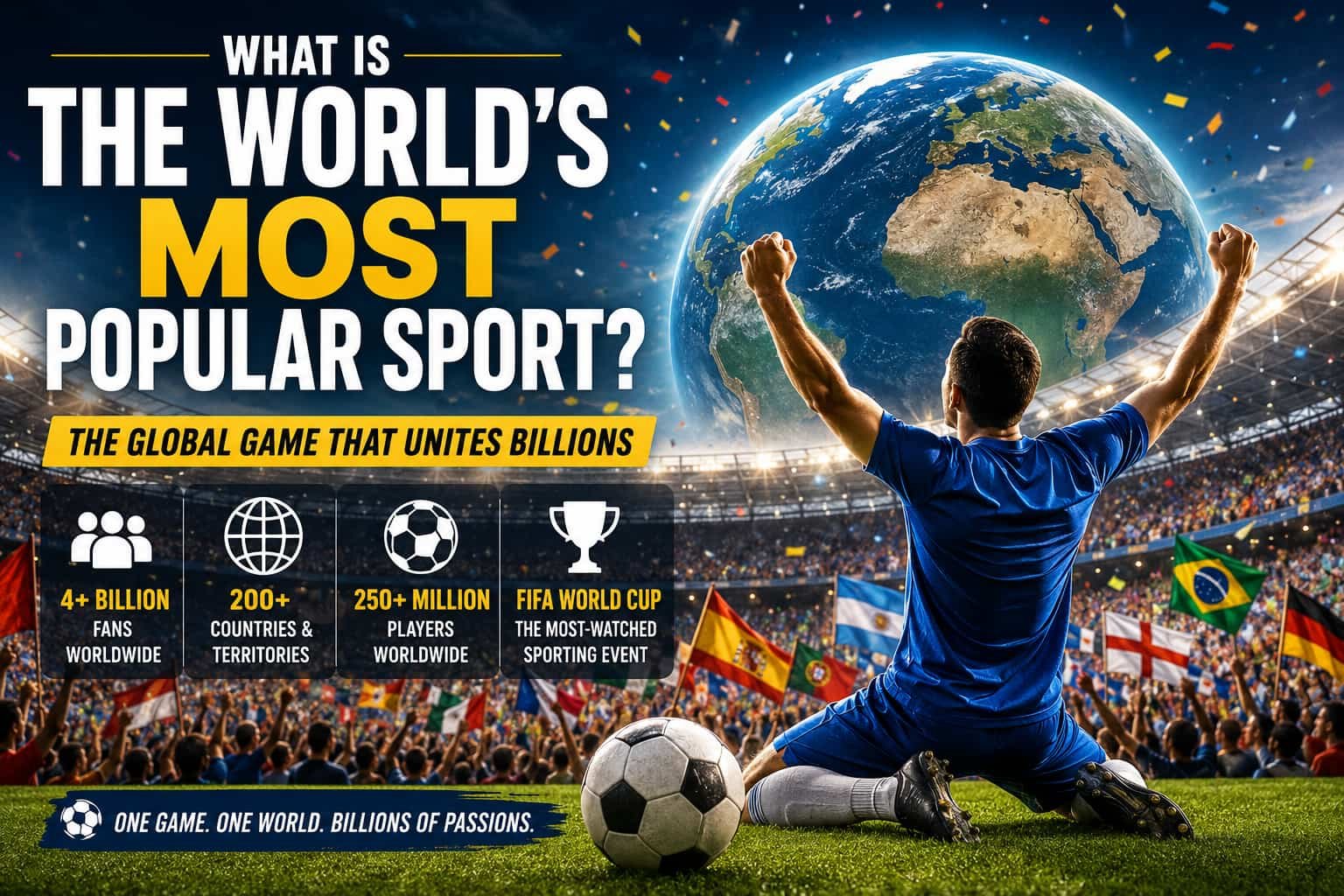
Football (Soccer) is widely recognized as the most popular sport in the world, with more than 3.5 billion fans and around 265 million active players globally. Its dominance comes from simplicity—just a ball and open space are enough to play.
However, global sports popularity is broader than just one game. Based on participation and fan engagement, the top sports include:
- Football (Soccer): ~265 million players, 3.5 billion fans
- Cricket: ~150+ million players, 2.5 billion fans
- Basketball: ~450+ million players, 800 million fans
- Badminton: ~220 million players, highly popular in Asia
- Volleyball: ~800+ million players, widely played indoors and outdoors
What stands out most is accessibility. Sports that require minimal equipment and can be played anywhere tend to dominate globally. Meanwhile, structured sports like the NBA or tournaments like the FIFA World Cup elevate global attention and fan engagement to massive levels.
Read More: What is Two-Factor Authentication
Why Some Sports Become Global Giants
Before diving into rankings, I think it’s important to understand something I’ve personally observed: popularity is not random.
The most followed sports usually share these traits:
- Easy to learn but hard to master
- Require minimal equipment
- Strong media coverage and global leagues
- Cultural integration in multiple regions
- International tournaments that build emotional loyalty
Now let’s break down the world’s most popular sports in detail.
1. Football (Soccer) – The Undisputed Global Leader
There’s no debate here—football is the king of global sports.
With over 3.5 billion fans, Football (Soccer) is played in nearly every country on Earth.
Why It’s So Popular
In my experience, football’s dominance comes from three key factors:
- You only need a ball
- It can be played anywhere
- It creates instant emotional excitement
Even children naturally understand it without formal coaching.
Global Impact
Football’s biggest stage is the FIFA World Cup, which brings together billions of viewers worldwide.
Other major competitions include:
- UEFA Champions League
- Copa América
- National leagues across Europe and South America
Cultural Power
Football isn’t just a sport—it’s identity. Countries like Brazil, Argentina, England, and Spain treat it like a national emotion.
2. Cricket – A Sport of Strategy and Patience
If football is global, cricket is deeply emotional in specific regions.
Cricket has around 2.5 billion fans worldwide.
Why People Love It
Cricket is unique because it combines:
- Strategy
- Long-format tension
- High-pressure moments
A single delivery can change an entire match.
Global Presence
Cricket dominates in:
- India
- Pakistan
- Australia
- England
- South Africa
Major tournaments include:
- ICC Cricket World Cup
- T20 World Cup
In my experience, cricket fans don’t just watch matches—they experience them emotionally for hours.
3. Basketball – Fast, Global, and Urban
Basketball is one of the fastest-growing sports worldwide.
Basketball has around 800 million fans and is expanding rapidly across Asia and Europe.
Why It Works Globally
Basketball is extremely accessible:
- Can be played in small courts
- Requires minimal equipment
- Easy to learn basics
Global Influence
The biggest driver of basketball popularity is the NBA, which has turned players into global icons.
From street courts to professional arenas, basketball has become a culture of speed, style, and athletic creativity.
4. Tennis – A Global Individual Sport
Tennis is one of the most balanced sports in terms of global reach.
Tennis has over 1 billion fans worldwide.
What Makes Tennis Special
- Easy to understand scoring system
- Played individually or in pairs
- Strong professional tour system
Major Tournaments
The sport revolves around iconic events such as:
- Wimbledon
- US Open
- French Open
- Australian Open
These tournaments shape global rankings and player legacies.
5. Volleyball – Simple but Highly Engaging
Volleyball is one of those sports I’ve seen being played almost everywhere—from beaches to school grounds.
Volleyball has over 800 million players and fans globally.
Why It’s Popular
- Can be played indoors and outdoors
- Minimal equipment required
- Works well in group settings
Variations
- Beach volleyball
- Indoor volleyball
- School and recreational formats
Its simplicity makes it one of the most widely played sports globally.
6. Badminton – The Hidden Giant
Badminton often surprises people in global rankings.
It has massive participation, especially in Asia.
Why It’s Growing Fast
- Extremely easy to start
- Requires small space
- Fast-paced gameplay
Countries like China, India, and Indonesia dominate this sport at the professional level.
7. Table Tennis – Speed and Precision
Table tennis is one of the fastest reflex-based sports.
It is widely played in:
- Schools
- Offices
- Clubs
It may look simple, but professional matches are incredibly fast and technical.
8. Baseball – Tradition and Strategy
Baseball remains deeply rooted in American and Japanese culture.
Key Features
- Slow strategic gameplay
- Strong league structure
- Deep community involvement
Major tournaments like the MLB and World Baseball Classic keep it globally relevant.
9. Rugby – Physical Power and Discipline
Rugby is one of the most physically intense sports in the world.
It includes:
- Rugby Union
- Rugby League
- Rugby Sevens
Events like the Rugby World Cup bring global attention to the sport.
10. Golf – Precision and Patience
Golf stands apart as a sport of focus and control.
It is played individually and requires:
- Strategy
- Precision
- Mental discipline
Major events include The Masters and PGA Championship.
Key Takeaways From Global Sports Popularity
After analyzing all these sports, a few patterns become very clear:
- Simplicity drives global adoption
- Media coverage increases global fanbase
- International tournaments build emotional connection
- Cultural influence shapes regional dominance
Conclusion
Sports are more than competition—they are a shared human experience.
From the global dominance of Football (Soccer) to the strategic depth of Cricket and the rising global energy of Basketball, every sport tells a story of culture, passion, and identity.
In my view, the future of sports will only become more global, more digital, and more connected. No matter where you are in the world, there’s always a sport that speaks your language.