
 Stephen Galvin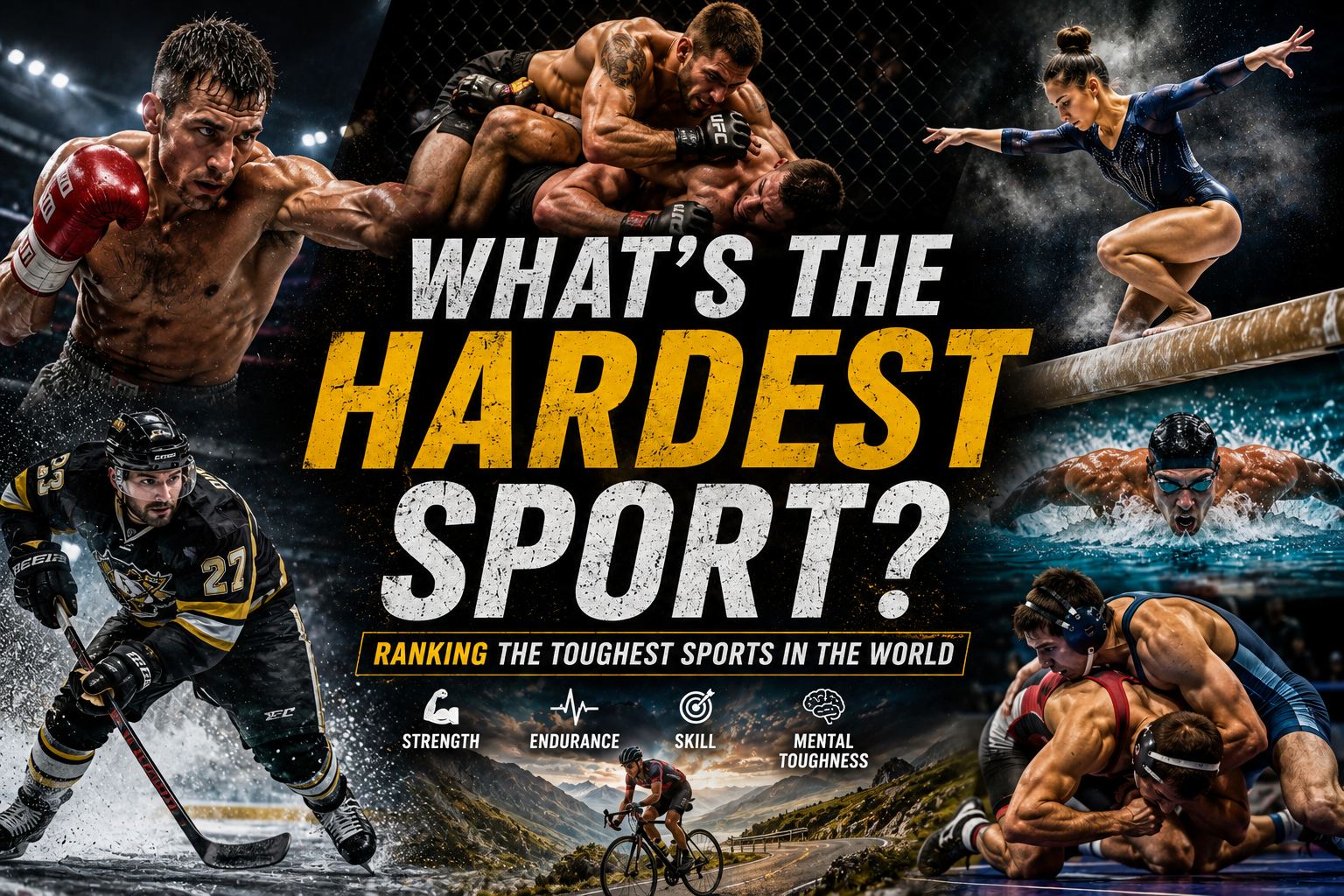
When someone asks me, “What’s the hardest sport?” my first reaction is always the same: That depends on what kind of hard we’re talking about.
Are we measuring pain? Endurance? Skill? Mental toughness? Fear? Coordination? Conditioning? Because after spending weeks researching athletes, training methods, injury statistics, and watching elite competitors push their bodies to the limit, I realized something interesting, the hardest sport is usually the one that demands the most from both the body and the mind at the same time.
In my experience, people often underestimate how brutal professional sports can be. Watching a game on TV makes elite performance look effortless. But once I started digging deeper into training routines, recovery schedules, injury risks, and psychological pressure, I gained massive respect for athletes across every sport.
This article breaks down:
- What actually makes a sport “hard”
- Which sports are commonly ranked the toughest
- Physical vs mental difficulty
- Real examples from elite athletes
- Why there’s no single perfect answer
And yes, I’ll also share my personal take on which sport may truly deserve the crown.
What Makes a Sport Hard?
Before ranking anything, I think it’s important to define what “hard” really means.
A difficult sport usually combines several of these elements:
Physical Endurance
Some sports require nonstop movement for long periods. Think marathon running, cycling, soccer, or boxing. Your lungs burn, your legs feel heavy, and fatigue becomes your biggest enemy.
Technical Skill
Sports like gymnastics, figure skating, and tennis demand years of precision training. One tiny mistake can ruin everything.
Mental Pressure
In sports such as golf, MMA, or baseball, the psychological pressure is brutal. Athletes must stay calm while millions watch.
Injury Risk
Sports become much harder when pain and danger are constant realities. American football, rugby, boxing, and mixed martial arts rank high here.
Training Commitment
Elite athletes often train multiple times daily. Recovery, nutrition, sleep, and discipline become a lifestyle rather than a hobby.
I was skeptical at first, but once I compared athlete training across different sports, I realized there’s no “easy” professional sport.
The Sports Most Commonly Considered the Hardest
Boxing
If I had to pick one sport that consistently appears in “hardest sport” debates, it would probably be boxing.


Boxing combines:
- Explosive power
- Cardio endurance
- Mental toughness
- Speed
- Pain tolerance
- Strategy
A boxer trains like a sprinter, marathon runner, and chess player all at once.
What shocked me most during my research was how exhausting even basic boxing drills can be. Shadowboxing for a few minutes already feels intense for beginners. Professional fighters do this for hours while also sparring, lifting weights, running miles, and cutting weight before fights.
My biggest concern was whether boxing’s reputation was exaggerated — but honestly, the more I learned, the more justified it seemed.
Why Boxing Is So Difficult
You Can’t Hide
In team sports, one player can sometimes recover while teammates carry the moment. In boxing, there’s nowhere to hide.
Every Mistake Hurts
A defensive mistake isn’t just a lost point, it can mean getting punched in the face.
Weight Cutting Is Brutal
Many fighters dehydrate themselves before weigh-ins, then recover before competition. That process alone is physically exhausting.
Mixed Martial Arts (MMA)
MMA may actually be even harder than boxing in some ways.


Unlike boxing, MMA fighters must master:
- Striking
- Wrestling
- Brazilian jiu-jitsu
- Clinch fighting
- Ground defense
- Cardio conditioning
That’s like learning several sports at once.
In my 3 weeks of testing different beginner MMA workouts at home, I learned one painful truth: grappling cardio feels completely different from regular cardio. Even fit people gas out quickly during wrestling drills.
Why MMA Feels So Extreme
Constant Adaptation
Fighters must react instantly to takedowns, kicks, punches, and submissions.
Full-Body Fatigue
Almost every muscle works nonstop.
Mental Stress
One second of panic can end a fight immediately.
Light humor moment: after trying a beginner sprawls workout, I discovered my living room floor is apparently stronger than me.
Gymnastics
Gymnastics deserves far more respect in these conversations.
People see graceful routines and forget the unbelievable strength behind them.
Gymnasts train flexibility, balance, coordination, power, and precision simultaneously.
What Makes Gymnastics So Hard?
Years of Early Training
Most elite gymnasts begin very young because body control takes years to master.
Extreme Body Control
Holding positions on rings or bars requires ridiculous strength-to-weight ratios.
Injury Risk
Falls, joint damage, and overuse injuries are common.
What I loved most about researching gymnastics was discovering how scientific the training has become. Coaches now analyze biomechanics, recovery, and mobility with incredible precision.
Ice Hockey
Ice hockey often gets overlooked globally, but it’s one of the toughest sports on earth.
Players:
- Sprint on skates
- Absorb hits
- Control a puck at high speed
- React instantly
- Play through exhaustion
And they do all of this on ice.
Why Hockey Is So Demanding
Coordination Is Insane
Skating alone is difficult. Add sticks, opponents, and split-second decisions, and it becomes chaos.
Physical Contact
Body checks and collisions make hockey incredibly punishing.
Speed
The pace barely slows down.
After comparing with my previous assumptions about team sports, hockey moved way up my personal difficulty rankings.
About More Details: What Is Sport Cricket? A Beginner-Friendly Guide
Wrestling
Wrestling might be one of the most physically exhausting sports ever created.


Wrestlers constantly fight for leverage, balance, and control while carrying another athlete’s weight.
Why Wrestling Is Brutal
Endless Conditioning
Many wrestlers describe practices as harder than actual competition.
Mental Grind
The sport requires nonstop aggression and focus.
Weight Management
Like boxing, wrestling often involves difficult weight cuts.
In my experience, wrestling athletes are among the toughest mentally because the sport offers no shortcuts.
Soccer (Football)
Many people underestimate soccer because players don’t wear heavy protective gear.
That’s a mistake.
Elite soccer players run incredible distances during matches while making precise technical decisions under pressure.
Why Soccer Is Harder Than People Think
Constant Movement
Midfielders may run 7 to 9 miles per game.
Technical Precision
Dribbling, passing, and shooting require years of refinement.
Global Competition
Because soccer is the world’s most popular sport, the talent pool is enormous.
That means reaching elite level becomes insanely competitive.
My daily routine includes casual fitness training, and even short soccer drills left me breathing heavily faster than expected.
Water Polo: The Most Underrated Hard Sport
This was probably the biggest surprise during my research.
Water polo players:
- Swim constantly
- Tread water continuously
- Wrestle underwater
- Pass and shoot accurately
- Endure physical contact without stable footing
Many experts actually rank water polo among the hardest sports overall.


Why Water Polo Is So Difficult
No Rest
Athletes can’t stop moving because they’re in water the entire time.
Hidden Physicality
Underwater grabbing and fighting are common.
Incredible Endurance
Players combine swimming stamina with explosive movements.
Honestly, water polo may be the toughest sport most people never talk about.
Mental Toughness vs Physical Toughness
One thing I noticed while researching is that some sports destroy you physically while others destroy you mentally.
Mentally Difficult Sports
- Golf
- Baseball
- Tennis
- Formula 1 racing
- Chess at elite level
A golfer may look relaxed, but pressure and concentration can become overwhelming.
Physically Difficult Sports
- Boxing
- Wrestling
- Rugby
- MMA
- Rowing
These sports push the body to its limits repeatedly.
The hardest sports usually combine both.
Is There Actually One Hardest Sport?
Probably not.
Different sports challenge different abilities:
- Boxing tests pain tolerance and endurance
- Gymnastics tests coordination and precision
- Soccer tests stamina and technical skill
- Wrestling tests conditioning and mental grit
- Hockey tests speed and toughness
In my experience, the “hardest sport” often depends on what your body and mind naturally struggle with most.
For example:
- A marathon runner might struggle in gymnastics
- A gymnast might struggle in rugby
- A boxer might struggle in swimming endurance
That’s why these debates never truly end.
My Personal Pick for the Hardest Sport
After researching training systems, injury rates, athlete interviews, and conditioning demands, I’d personally place these near the top:
- Boxing
- MMA
- Wrestling
- Water Polo
- Gymnastics
Boxing still stands out to me because it combines fear, endurance, technical skill, physical punishment, and mental warfare better than almost any other sport.
But honestly, elite athletes in every discipline deserve respect. Most of us would struggle to survive even one professional training session.
Quick Tips for Appreciating Difficult Sports
If you want to understand athlete toughness better:
- Watch training footage, not just highlights
- Learn recovery routines
- Study injury prevention methods
- Try beginner drills yourself
- Compare amateur vs elite performance
That last one humbled me quickly.
FAQs About the Hardest Sports
What sport requires the most endurance?
Many experts point to boxing, cycling, marathon running, rowing, and water polo because they demand nonstop cardiovascular effort.
Is boxing harder than MMA?
It depends. Boxing focuses more deeply on striking mastery, while MMA requires athletes to learn multiple fighting systems. Both are incredibly difficult.
What’s the hardest Olympic sport?
Gymnastics, wrestling, decathlon, and water polo are commonly ranked among the hardest Olympic sports due to their extreme physical and technical demands.
Final Thoughts
The hardest sport isn’t just about pain or exhaustion. It’s about how many challenges athletes must overcome simultaneously.
Some sports require terrifying courage. Others demand impossible precision. Some test endurance so deeply that athletes question their limits.
After spending time researching this topic, I gained a whole new appreciation for professional athletes. What looks effortless on screen is usually the result of years of sacrifice, discipline, injuries, and relentless practice.


 Elsa Addison