 Stephen Galvin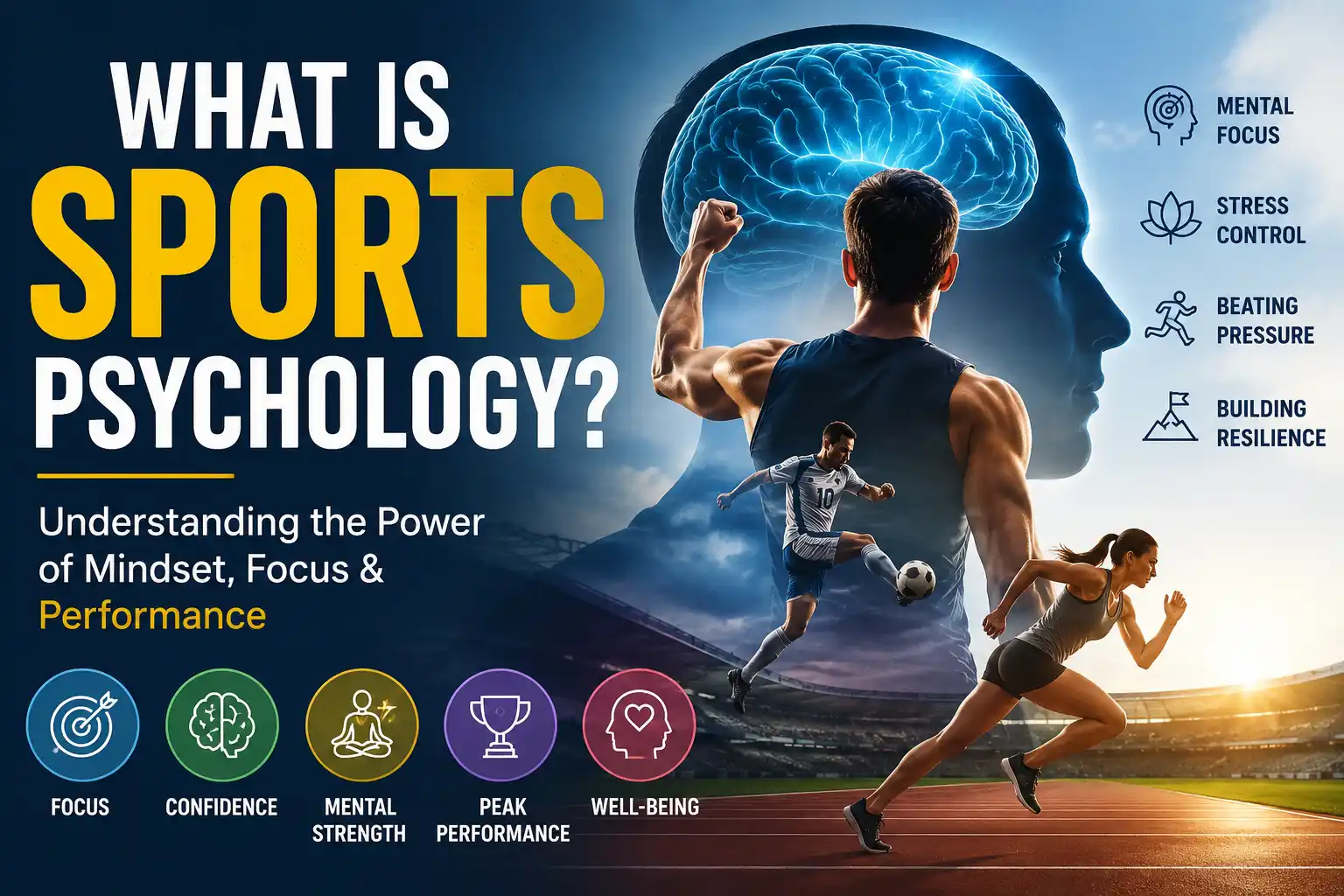
Introduction: Why I Became Interested in Sports Psychology
I still remember watching a tennis match where a top-ranked player completely lost momentum, not because of skill, but because of pressure. The physical ability was there, but mentally, something shifted. That moment made me curious about one question: what really controls performance in sport, the body or the mind?
That curiosity led me into exploring sports psychology, a field that completely changed how I understand athletic performance, motivation, and even everyday stress handling.
In simple terms, sports psychology is not just about athletes. It’s about how the human mind reacts under pressure, how confidence is built, and how performance can be improved through mental training techniques.
In this article, I’ll break it down in a simple, experience-based way—just like I learned it—so you can clearly understand what it is, how it works, and why it matters in sports and life.
Overview: What Is Sports Psychology?
Sports Psychology Definition
Sports psychology is the scientific study and practical application of psychological factors that influence athletic performance, exercise behavior, and physical activity.
It focuses on how mental, emotional, and social factors affect performance, and how athletes can improve results using mental strategies like:
- Motivation
- Focus
- Confidence building
- Emotional control
- Resilience under pressure
From my understanding, it sits at the intersection of mind and movement—where psychology meets physical performance.
Core Idea Behind Sports Psychology
When I first studied this topic, one thing stood out:
Two athletes with equal physical skill often perform differently because of mental strength.
This is exactly what sports psychology explains. It studies:
- Why athletes choke under pressure
- How confidence affects performance
- Why focus breaks during competition
- How mindset impacts recovery and consistency
Core Areas of Sports Psychology
1. Performance Enhancement
This is the most popular area.
Sports psychologists use techniques like:
- Visualization (imagery)
- Goal setting
- Positive self-talk
- Mental rehearsal
For example, I once read about elite sprinters mentally running the race hundreds of times before actual competition. This improves reaction time and confidence.
These techniques help athletes:
- Stay focused
- Improve consistency
- Reduce performance anxiety
2. Mental Wellbeing in Athletes
Athletes are not machines—they deal with:
- Stress
- Anxiety
- Burnout
- Pressure from fans and coaches
Sports psychology helps them manage these challenges.
For example, techniques like Cognitive Behavioral Therapy (CBT)—a well-known psychological method used globally—help athletes identify negative thinking patterns and replace them with healthier thoughts.
Even organizations like the American Psychological Association highlight the importance of mental health in sports performance.
3. Injury Recovery and Rehabilitation
One underrated area is injury recovery.
When I studied athlete case reports, I noticed something interesting:
Even after physical recovery, many athletes struggle mentally.
Sports psychologists help by:
- Reducing fear of re-injury
- Rebuilding confidence
- Supporting emotional recovery
This mental support often determines how quickly an athlete returns to peak performance.
4. Team Dynamics and Communication
Sports psychology also focuses on team sports.
It improves:
- Leadership skills
- Communication
- Trust among teammates
- Group motivation
I’ve personally observed that teams with better communication often outperform physically stronger teams.
Read More About: Sports Medicine Explained: Benefits, Uses & Careers
Key Techniques Used in Sports Psychology
1. Goal Setting
Goal setting is one of the most powerful tools.
Good goals are:
- Specific
- Measurable
- Achievable
- Realistic
- Time-based
Example:
Instead of “I want to be better,” athletes set goals like
“I want to improve my sprint time by 0.2 seconds in 6 weeks.”
2. Imagery (Visualization)
Athletes mentally rehearse performance before executing it.
They imagine:
- Movements
- Environment
- Emotions
- Success outcomes
This builds confidence and muscle memory.
3. Self-Talk
Self-talk is the inner voice athletes use.
Example:
- “I can do this”
- “Stay calm”
- “Focus on technique”
Positive self-talk improves confidence and reduces anxiety.
4. Arousal Regulation
This refers to controlling emotional intensity before performance.
Too nervous → performance drops
Too relaxed → lack of focus
Techniques include:
- Deep breathing
- Music
- Relaxation exercises
- Mindfulness
5. Biofeedback
Biofeedback uses technology to track:
- Heart rate
- Muscle tension
- Brain activity
Athletes learn how their body reacts and adjust accordingly.
6. Pre-Performance Routines
I found this especially interesting in real athletes.
Many athletes follow strict routines like:
- Same warm-up
- Same playlist
- Same clothing order
This creates mental stability and reduces anxiety before competition.
Types of Sports Psychologists
1. Educational Sports Psychologists
They teach mental skills like:
- Focus training
- Goal setting
- Confidence building
2. Clinical Sports Psychologists
They deal with deeper mental health issues such as:
- Depression
- Anxiety disorders
- Eating disorders
- Substance abuse
They often combine therapy with performance training.
Real-Life Insight: What I Observed in Athl
While researching, I noticed a pattern:
Athletes who trained mentally were:
- More consistent
- Less affected by failure
- Faster in recovery after losses
On the other hand, physically skilled athletes without mental training often struggled under pressure.
This clearly shows that mental training is just as important as physical training.
Career Path in Sports Psychology
To become a sports psychologist, typically you need:
- Bachelor’s in psychology or sports science
- Master’s or doctoral degree
- Training under licensed professionals
You may also study areas like:
- Kinesiology
- Physiology
- Sports medicine
Some professionals get certification through bodies like the American Board of Sport Psychology.
Career roles include:
- Sports psychologist
- Mental performance coach
- University researcher
- Team consultant
Why Sports Psychology Matters (Key Benefits)
Sports psychology helps:
- Improve focus and performance
- Build mental toughness
- Reduce anxiety and stress
- Enhance motivation
- Support injury recovery
But its impact goes beyond sports.
I’ve personally noticed these skills are useful in:
- Exams
- Job interviews
- Public speaking
- High-pressure situations
That’s why it’s often called a life performance science, not just a sports science.
Common Problems It Solves
- Fear of failure
- Performance anxiety
- Lack of confidence
- Burnout
- Loss of motivation
- Pressure handling issues
And the solution always starts with mindset training, not physical change.
FAQs
1. What is the main goal of sports psychology?
The main goal is to improve athletic performance and mental wellbeing by using psychological techniques like focus training, motivation, and stress management.
2. Can sports psychology help non-athletes?
Yes. It is also used in business, education, and performing arts to improve focus, confidence, and performance under pressure.
3. Is sports psychology only for professional athletes?
No. It is used by athletes at all levels—youth, amateur, and professional—anyone involved in physical performance or competition.
Conclusion: The Mind Is the Real Game-Changer
After researching and analyzing sports psychology deeply, one thing is clear:
Physical ability may get you into the game
But mental strength decides how far you go
Sports psychology teaches that performance is not just about training the body—it’s about training the mind to stay strong under pressure, focused under stress, and confident in uncertainty.
Whether you’re an athlete or not, these principles can help you perform better in almost every area of life.


 Elsa Addison