 Mark Jones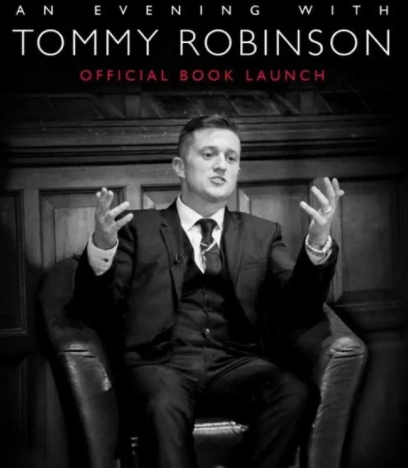
Overview
The headline regarding a successful book launch with thousands of attendees refers to the November 2017 release event for Mohammed’s Koran: Why Muslims Kill For Islam.
Event Location
The gathering was originally scheduled at the Bowlers Exhibition Centre in Greater Manchester but was later moved to Castlefield Bowl in Manchester city centre following venue-related concerns and opposition.
Attendance
Thousands of supporters reportedly attended the launch and book-signing event, making it one of the most widely discussed public appearances associated with Tommy Robinson during that period.
Counter-Protests
The event also attracted opposition from campaign groups, including Unite Against Fascism (UAF), which organized demonstrations in Manchester. While tensions existed between supporters and critics, the event proceeded without major incident.
Continuing Public Activity
The founder of the English Defence League has continued to publish books, conduct speaking tours, participate in political campaigns, and maintain a public profile through various media channels over the years.
Tommy Robinson: The Rancour, Rhetoric and Riches of Brand Tommy
Few modern British public figures have generated as much debate, controversy, support, criticism, and media attention as Tommy Robinson.
Known legally as Stephen Yaxley-Lennon, Robinson has evolved from a local activist in Luton into one of Britain’s most recognizable and polarizing political personalities. His story intersects with issues ranging from free speech and social media influence to political activism, extremism, online fundraising, and media strategy.
In this article, I take a closer look at the rise of “Brand Tommy,” examining how Robinson built a national and international profile, the controversies that followed him, and the financial and media ecosystem that helped sustain his influence.
Whether viewed as a campaigner, media entrepreneur, political activist, or controversial public figure, Robinson remains a significant case study in the power of modern digital communication.
Who Is Tommy Robinson?
Tommy Robinson, whose real name is Stephen Yaxley-Lennon, was born and raised in Luton, Bedfordshire.
Before becoming a well-known activist, he worked as an apprentice aircraft engineer at Luton Airport and later earned a living in property renovation and plumbing alongside family members.
His early years appeared relatively conventional, but several criminal convictions and encounters with the justice system would later shape both his public image and personal trajectory.
Over time, Robinson became increasingly involved in political activism, particularly concerning issues he believed were affecting his hometown and wider British society.
Early Life and the Road to Activism
One of the defining influences on Robinson’s political outlook was the presence of the extremist network al-Muhajiroun in Luton.
Public demonstrations involving the group, particularly during the return of soldiers from the Royal Anglian Regiment, became major flashpoints within the community.
In my experience researching political movements, local events often become catalysts for broader activism. For Robinson, these incidents helped shape the direction of his future campaigns.
As tensions grew, Robinson and several associates organized counter-demonstrations, leading to the eventual creation of the English Defence League (EDL) in 2009.
The Creation of the English Defence League
The English Defence League quickly attracted attention across Britain.
Unlike traditional political organizations, the EDL relied heavily on Facebook and social media to mobilize supporters. The movement had no conventional membership structure, which allowed rapid expansion.
Robinson emerged as the organization’s most recognizable spokesperson.
Interestingly, the name “Tommy Robinson” was not his birth name. He adopted the pseudonym from a well-known figure associated with football hooligan culture linked to Luton Town FC.
The name eventually became more recognizable than Stephen Yaxley-Lennon himself.
Social Media and the Rise of Brand Tommy
One of the most fascinating aspects of Robinson’s story is his understanding of digital media.
Long before many political activists fully embraced online platforms, Robinson was building audiences through Facebook, Twitter, YouTube, and independent media channels.
His content typically focused on:
Political Commentary
Robinson frequently criticized mainstream political institutions, government policies, and media organizations.
Grooming Gang Investigations
He became particularly known for commentary surrounding grooming gang cases, arguing that authorities had failed victims.
Anti-Establishment Messaging
A recurring theme throughout his content involved claims that ordinary citizens were being ignored by political elites.
These themes resonated strongly with a segment of the public, helping him build an audience that eventually numbered in the hundreds of thousands.
The Rebel Media Partnership
A major turning point came through Robinson’s relationship with Rebel Media.
The Canadian media organization, founded by Ezra Levant, provided Robinson with a larger international platform and professional production resources.
Under this arrangement, Robinson produced video reports, commentary segments, and documentary-style content designed for online audiences.
Reports suggested that this partnership significantly increased both his visibility and earning potential.
At this stage, Brand Tommy was no longer simply a British phenomenon—it had become an international online media brand.
Fundraising, Donations, and Revenue Streams
One of the most discussed aspects of Robinson’s career is the financial model behind his activism.
His supporters contributed through various channels, including:
- Online donations
- PayPal contributions
- Bitcoin transfers
- Crowdfunding campaigns
- Book sales
- Public speaking events
The growth of alternative media allowed personalities like Robinson to monetize audiences directly without relying on traditional publishers or broadcasters.
This approach fundamentally changed how political figures could build influence.
Legal Challenges and Contempt of Court Cases
Despite his growing popularity among supporters, Robinson’s legal difficulties continued.
Among the most significant controversies were contempt of court findings linked to livestream broadcasts outside criminal trials.
Canterbury Crown Court
In 2017, Robinson received a suspended sentence after filming defendants involved in a grooming gang case.
Leeds Crown Court
A year later, he again filmed defendants while legal reporting restrictions were in place.
The resulting legal proceedings led to a prison sentence and sparked widespread public debate about journalism, free speech, and the limits of court reporting.
Supporters viewed the case as an attack on free expression.
Critics argued the restrictions existed to protect fair trial rights.
The controversy remains one of the defining moments of Robinson’s public career.
The Mohammed’s Koran Book Launch
In November 2017, Robinson attracted headlines following the launch of his book Mohammed’s Koran: Why Muslims Kill For Islam.
The event drew thousands of attendees after being moved from Bowlers Exhibition Centre to Castlefield Bowl in Manchester.
At the same time, counter-protests organized by Unite Against Fascism demonstrated the level of opposition Robinson continued to attract.
The event highlighted an important reality:
Few public figures in Britain generated such intense reactions from both supporters and critics simultaneously.
Influence, Supporters, and Criticism
Understanding Tommy Robinson requires examining both sides of the debate.
Why Supporters Follow Him
Many supporters believe Robinson addresses issues they feel are ignored by mainstream institutions.
Common reasons include:
- Concerns about crime
- Dissatisfaction with political elites
- Distrust of traditional media
- Free speech concerns
Why Critics Oppose Him
Critics argue that Robinson’s messaging contributes to social division and promotes harmful stereotypes.
They point to:
- Controversial statements
- Legal convictions
- Associations with far-right movements
- Social media content that has been removed for policy violations
The result is one of the most polarized public reputations in modern British politics.
Deplatforming and Political Setbacks
As social media companies increased moderation efforts, Robinson faced restrictions across multiple platforms.
Accounts were removed or suspended due to alleged violations of hate speech and platform policies.
These decisions significantly reduced his online reach and reportedly affected fundraising income.
Political setbacks followed as well.
His attempt to become a Member of the European Parliament resulted in a poor electoral performance, highlighting the challenge of converting online popularity into electoral success.
Why Brand Tommy Remains Relevant
Even years after many of the events that first brought him attention, Tommy Robinson continues to be discussed.
His story offers insights into:
- Political branding
- Social media influence
- Online fundraising
- Digital activism
- Public controversy
- Modern populist movements
For researchers, journalists, and political observers, Robinson’s rise demonstrates how modern communication technologies can transform local activists into international personalities.
Key Takeaways
- Tommy Robinson’s real name is Stephen Yaxley-Lennon.
- He rose to prominence through the English Defence League.
- Social media played a critical role in building his audience.
- Rebel Media and Ezra Levant helped expand his international reach.
- Contempt of court cases became defining moments in his career.
- Supporters and critics remain sharply divided over his influence.
- His story illustrates the power of political branding in the digital age.
Frequently Asked Questions
What is Tommy Robinson’s real name?
Tommy Robinson’s legal name is Stephen Yaxley-Lennon.
Why was Tommy Robinson jailed?
He has received prison sentences for several offenses over the years, including contempt of court, passport-related offenses, assault, and mortgage fraud.
What is Brand Tommy?
“Brand Tommy” refers to the public persona, media presence, fundraising network, and political identity that developed around Tommy Robinson through social media, activism, books, public appearances, and online content.
Final Thoughts
Having researched political movements, digital media trends, and online activism extensively, I find Tommy Robinson’s story to be one of the most significant examples of personal branding in modern British politics.
Regardless of whether one views him positively or negatively, his journey demonstrates how social media, alternative media platforms, and direct audience engagement can reshape political influence in the digital age.
What are your thoughts on the rise of Brand Tommy? Do you believe social media has fundamentally changed political activism? Share your perspective in the comments and join the discussion.