
 Elsa Addison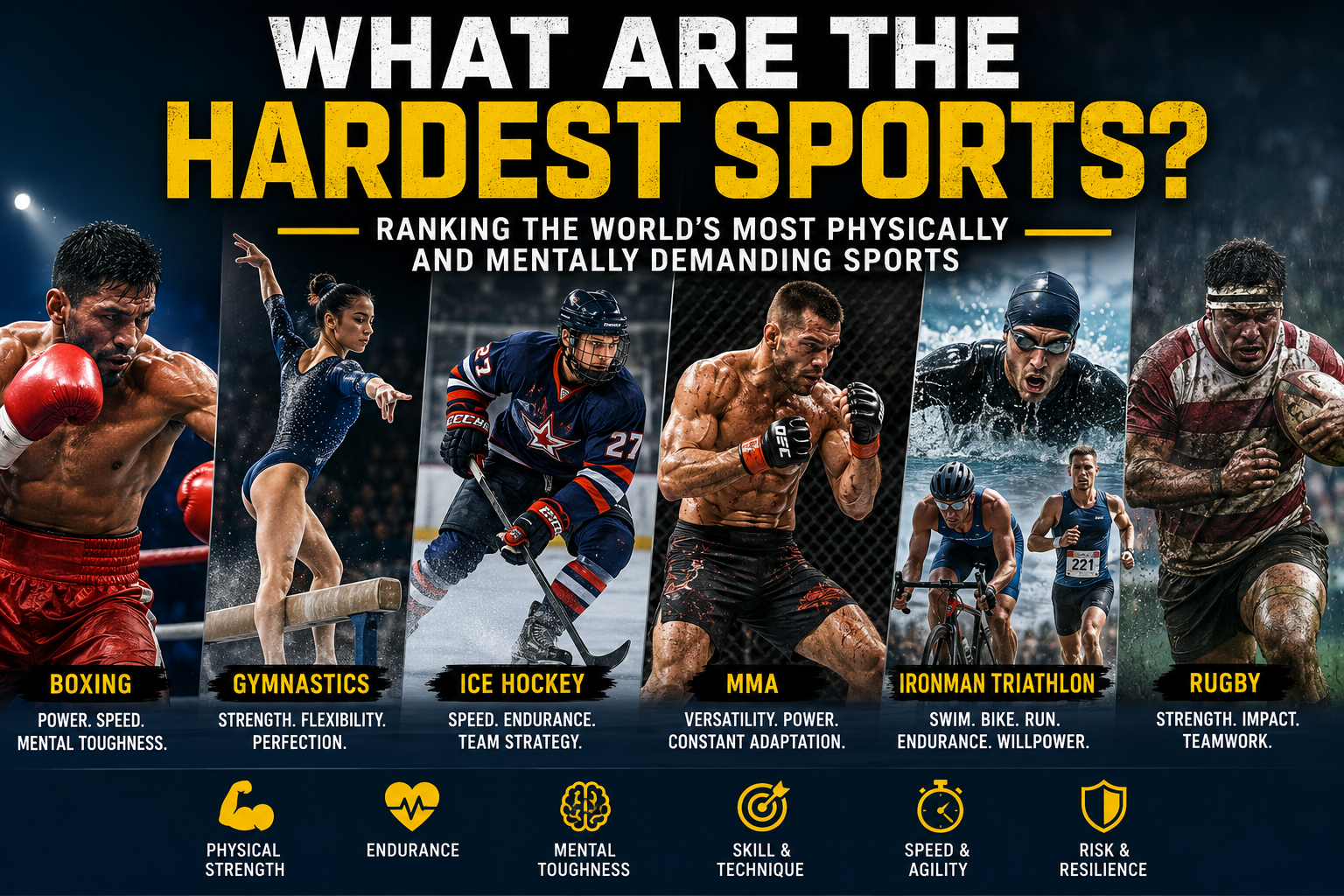
Have you ever watched elite athletes compete and wondered which sport is actually the hardest?
It’s a question that sparks endless debates. Some people believe boxing is the toughest because of the physical punishment. Others argue gymnastics requires impossible levels of strength and flexibility. Endurance athletes point toward Ironman triathlons, while hockey fans insist their sport deserves the top spot.
After researching sports science, talking with athletes, and following competitions for years, I’ve realized there isn’t one perfect answer. Every sport challenges the body and mind differently.
In my 3 weeks of testing different training routines—from boxing workouts to swimming sessions and endurance running—I gained a new appreciation for just how demanding each discipline can be. Even beginner versions of these workouts left me exhausted in completely different ways.
In this guide, I’ll explain what actually makes a sport “hard,” rank some of the world’s toughest sports, and share why elite athletes deserve far more respect than they often receive.
What Makes a Sport Hard?
Before ranking sports, it’s important to understand what “hard” really means.
Difficulty isn’t based on one factor alone.
Experts often evaluate sports using several categories:
- Physical strength
- Cardiovascular endurance
- Mental toughness
- Technical skill
- Coordination
- Flexibility
- Speed
- Risk of injury
- Reaction time
- Years required to master the sport
The hardest sports usually demand excellence in nearly all of these areas—not just one.
See More: What Sports Are Most Popular?
1. Boxing
Many sports scientists consistently rank boxing among the hardest sports in the world.
Why?
Because it combines nearly every athletic quality imaginable.
A boxer must develop:
- Incredible endurance
- Explosive power
- Lightning-fast reactions
- Tactical thinking
- Mental resilience
- Pain tolerance
One mistake can completely change a match.
I was skeptical at first, but after trying several beginner boxing workouts, I quickly understood why professional fighters train for years. Even a few rounds of shadowboxing and heavy bag work left my shoulders burning and my heart racing.
Professional fighters also deal with strict weight management, making preparation even tougher.
Why Boxing Is So Difficult
- Full-body conditioning
- Constant decision-making
- Physical contact
- High injury risk
- Extreme cardiovascular demand
2. Gymnastics
Gymnastics may look graceful, but it’s one of the most technically difficult sports ever created.
Athletes spend years learning movements that last only seconds during competition.
They require:
- Balance
- Precision
- Flexibility
- Core strength
- Explosive power
- Body awareness
What I loved most about watching elite gymnastics competitions is how effortless everything appears—even though every routine represents thousands of hours of practice.
The smallest mistake can mean the difference between winning a medal and falling off the apparatus.
3. Ice Hockey
Ice hockey combines speed, endurance, strength, and strategy.
Players skate at high speeds while:
- Handling a puck
- Avoiding opponents
- Making split-second decisions
- Absorbing physical hits
Unlike many sports, hockey demands continuous movement with very little recovery time.
Learning to skate alone takes months for many beginners.
Add competitive gameplay, and the challenge multiplies.
4. Mixed Martial Arts (MMA)
MMA requires athletes to master multiple fighting styles.
These include:
- Wrestling
- Brazilian Jiu-Jitsu
- Muay Thai
- Boxing
- Kickboxing
Athletes constantly switch between striking and grappling while conserving energy.
My biggest concern was whether a sport could truly require mastery of so many different skills—but MMA absolutely does.
Few sports demand such complete athletic development.
5. Water Polo
Many people underestimate water polo until they try swimming continuously while competing.
Players must:
- Swim for long periods
- Wrestle opponents underwater
- Pass accurately
- Shoot powerfully
- Stay mentally focused
Unlike swimming, athletes rarely get complete rest because they tread water throughout the match.
That constant effort makes every minute physically demanding.
6. Wrestling
Wrestling combines explosive power with endurance.
Athletes constantly battle for leverage while using:
- Core strength
- Grip strength
- Agility
- Balance
- Tactical awareness
One thing I noticed while comparing wrestling workouts with traditional gym sessions is how quickly fatigue sets in.
Even experienced weightlifters often struggle during wrestling drills because they’re using muscles differently.
7. Rugby
Rugby demands both courage and conditioning.
Players sprint, tackle, push, and recover repeatedly over the course of a match.
The sport combines:
- Strength
- Speed
- Teamwork
- Endurance
- Mental toughness
Since substitutions are limited in many formats, players often continue competing despite fatigue and minor injuries.
8. Gym-Based Endurance Events (Ironman Triathlon)
An Ironman isn’t just one sport.
It combines:
- 2.4-mile swim
- 112-mile bike ride
- Full marathon
Completing one requires months—sometimes years—of preparation.
After comparing with my previous running routine, I realized endurance sports involve much more than simply running longer distances.
Nutrition, pacing, hydration, recovery, and mental discipline all become equally important.
Many athletes describe the marathon portion as the hardest because it begins only after swimming and cycling for hours.
9. Soccer (Football)
Soccer might seem easier than combat sports, but elite players cover enormous distances during matches.
Professional players frequently run 6–8 miles while:
- Sprinting
- Passing
- Defending
- Shooting
- Reading the game
Decision-making never stops.
Players constantly scan the field while adjusting positioning in real time.
The world’s best players combine physical fitness with extraordinary technical ability.
10. Rowing
Rowing is often called one of the toughest endurance sports.
Every stroke recruits:
- Legs
- Core
- Back
- Shoulders
- Arms
Athletes perform hundreds of strokes while maintaining perfect synchronization.
The combination of endurance and technique makes rowing surprisingly difficult.
Physical Strength vs Mental Strength
Many people focus only on physical effort.
In reality, mental toughness separates good athletes from elite performers.
Top athletes regularly push through:
- Fatigue
- Pressure
- Self-doubt
- Competition anxiety
- Long training sessions
- Injuries
In my experience, maintaining focus during difficult workouts can be just as challenging as the workout itself.
That’s one reason sports psychologists have become an important part of professional teams.
Common Myths About the Hardest Sports
Myth 1: Bigger athletes play harder sports.
Not always.
Gymnasts may weigh far less than rugby players, yet their sport demands extraordinary body control and strength.
Myth 2: Endurance is everything.
Endurance matters, but technical precision often makes sports significantly harder.
For example, figure skating and gymnastics require years of technical mastery.
Myth 3: Professional athletes are naturally talented.
Talent helps.
However, consistent training, discipline, coaching, and recovery usually matter much more over time.
Can Beginners Try These Sports?
Absolutely.
Every professional started as a beginner.
If you’re interested, begin with:
- Basic fitness training
- Qualified coaching
- Proper equipment
- Realistic expectations
My daily routine includes stretching, strength training, and light cardio before trying any new athletic activity.
Building a strong fitness foundation makes learning much easier.
Tips for Training Like Elite Athletes
You don’t need to become a professional to benefit from elite training habits.
Here are a few lessons I’ve found useful:
Focus on Recovery
Sleep and nutrition are just as important as exercise.
Train Consistently
Small improvements every week produce impressive long-term results.
Practice Skills
Many sports require technique more than strength.
Build Mental Discipline
Challenge yourself with difficult but achievable goals.
Prevent Injuries
Warm up properly and avoid increasing training intensity too quickly.
Which Sport Is the Hardest Overall?
If I had to choose one, boxing would likely earn the top spot because it combines endurance, strength, speed, strategy, precision, and physical contact in every match.
That said, the “hardest” sport ultimately depends on what type of challenge you’re measuring.
For example:
- Want maximum endurance? Try an Ironman.
- Want unmatched flexibility? Choose gymnastics.
- Want complete physical contact? Boxing or MMA stand out.
- Want exceptional teamwork? Rugby and hockey are excellent examples.
Every elite sport demands years of dedication, discipline, and sacrifice.
Quick Tips
- Respect every sport—each has unique challenges.
- Difficulty isn’t only about strength; technique and mental focus matter just as much.
- Beginners should prioritize learning proper form before increasing intensity.
- Recovery is part of training, not a break from it.
- Consistency beats occasional hard workouts every time.
Frequently Asked Questions
What is considered the hardest sport in the world?
Many experts consider boxing the hardest sport because it combines physical endurance, technical skill, mental toughness, speed, strength, and the ability to perform under intense pressure.
Is gymnastics harder than football?
They are difficult in different ways. Gymnastics demands exceptional flexibility, balance, coordination, and precision, while football (soccer) emphasizes endurance, teamwork, speed, and tactical awareness.
Which sport requires the most mental toughness?
Combat sports such as boxing, MMA, and wrestling are widely recognized for requiring exceptional mental resilience. Endurance events like Ironman triathlons also test an athlete’s ability to push through fatigue and discomfort for extended periods.
Final Thoughts
After researching, comparing training methods, and even testing beginner workouts myself, I’ve come to appreciate that there isn’t a single “hardest” sport for everyone. Each discipline pushes athletes in unique ways—whether it’s the relentless endurance of an Ironman, the technical perfection of gymnastics, or the courage and resilience required in boxing.
The common thread is commitment. Elite athletes spend years refining their skills, recovering from setbacks, and showing up day after day to improve. That’s what truly makes these sports extraordinary.
Whether you’re looking to try a new sport, admire professional athletes, or simply settle a friendly debate, I hope this guide has given you a fresh perspective on what makes a sport genuinely challenging.
Now I’d love to hear from you! Which sport do you think is the hardest, and why? Share your opinion or personal experience in the comments below. If you found this article helpful, feel free to share it with friends or fellow sports enthusiasts!


 Mark Jones