 Mark Jones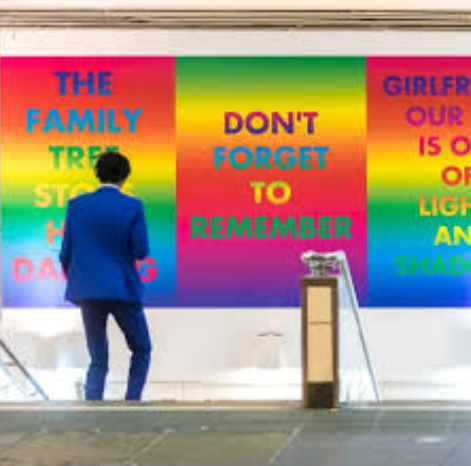
Introduction
Public art has the power to completely change how people experience a city. In my experience exploring London’s cultural spaces, some of the most memorable artworks are not found inside museums they appear unexpectedly in everyday places like Tube stations, streets, and public squares.
That is exactly what happened when David McDiarmid’s iconic Rainbow Aphorisms series was unveiled at Brixton Underground Station through a collaboration between Art on the Underground, Studio Voltaire, and This is Clapham.
The project transformed sections of the Transport for London network into vibrant spaces for reflection, activism, LGBTQ+ visibility, and HIV/AIDS awareness. More importantly, it introduced many London commuters to the work of a groundbreaking queer artist whose messages remain deeply relevant today.
Overview
The late Australian artist and activist David McDiarmid’s vibrant Rainbow Aphorisms series was celebrated across the London Underground network. Spanning stations like Brixton Underground Station, the 2017–2018 public art project showcased bold, queer-focused statements addressing the HIV/AIDS crisis.
See More: You Can Still Experience the New Voice in Pop Painting in London
The landmark London Underground exhibition featured several defining elements:
- Rainbow Aphorisms (1993–1995), a psychedelic series of witty and emotionally charged statements presented on vivid rainbow backgrounds.
- Installations displayed above Brixton Station entrances and throughout the Tube network.
- Powerful slogans confronting homophobia, HIV stigma, and queer identity.
- Collaboration between Studio Voltaire, Art on the Underground, the David McDiarmid Estate, and curator Dr. Sally Gray.
The exhibition marked the first major presentation of McDiarmid’s work in the UK and helped bring LGBTQ+ activist art into one of the busiest public transport systems in the world.
Who Was David McDiarmid?
Before understanding the importance of the Brixton Station artwork, it helps to understand the artist behind it.
David McDiarmid was born in Hobart in 1952 and became one of Australia’s most influential queer artists and political activists.
His work focused heavily on:
- Gay male identity
- LGBTQ+ visibility
- HIV/AIDS awareness
- Political activism
- Social hypocrisy
- Queer liberation
In my experience researching LGBTQ+ visual culture, McDiarmid stands out because he blended emotional honesty with bold graphic design. His art was never passive. It challenged people directly.
He was deeply involved in the Sydney Gay Liberation movement and later contributed creative direction to the Sydney Gay and Lesbian Mardi Gras.
His influence stretched from Sydney to New York City, where he lived and worked during the height of the AIDS crisis.
What Are Rainbow Aphorisms?
At the center of the London project was Rainbow Aphorisms, a collection created between 1993 and 1995.
The series combines:
- Bright rainbow-colored backgrounds
- Sharp emotional statements
- Queer humor
- Political commentary
- Personal reflections on HIV/AIDS
Some of the most recognizable works included:
- THE FAMILY TREE STOPS HERE DARLING, DON’T FORGET TO REMEMBER
- GIRLFRIEND OUR LIFE IS ONE OF LIGHTS AND SHADOWS
These pieces used bold typography and playful language to address deeply painful realities surrounding the HIV/AIDS epidemic.
What impressed me most while studying the project was how accessible the messaging felt. Even commuters rushing through the Underground could instantly connect with the emotion and urgency behind the words.
Why Brixton Station Was the Perfect Location
Choosing Brixton Underground Station was highly symbolic.
Brixton has long been associated with:
- Cultural diversity
- Creative expression
- Political activism
- LGBTQ+ inclusion
- Independent arts communities
Displaying activist artwork in a busy transport hub meant thousands of people could encounter these messages every day.
The project also expanded into nearby areas including:
- Clapham
- Brixton
- Two Brewers
This helped create a wider community-focused cultural experience instead of limiting the exhibition to one location.
How Art on the Underground Changed Public Art in London
Art on the Underground has become one of London’s most influential public art initiatives.
Established in 2000, the programme commissions artists to create works that enrich journeys across the Tube network.
In my opinion, this project succeeded because it used public transport as more than infrastructure. It transformed stations into spaces for cultural dialogue.
Rather than separating art from everyday life, commuters became part of the experience itself.
The programme has also collaborated with artists including:
- Matthew Raw
- Assemble
- Marc Camille Chaimowicz
- Marianna Simnett
Projects like Clay Station continue pushing contemporary art into public spaces across London.
The HIV/AIDS Message Behind the Artwork
One of the strongest aspects of McDiarmid’s work is how directly it confronted the HIV/AIDS crisis.
During the 1980s and 1990s, many LGBTQ+ communities experienced:
- Fear
- Stigma
- Political neglect
- Discrimination
- Widespread loss
McDiarmid’s artwork challenged those realities using humor, color, and unapologetic queer expression.
The messages were not only artistic — they were acts of resistance.
In one of his reflections, McDiarmid explained that he wanted to communicate complex emotions to a gay male audience without simplifying the experience.
That emotional honesty remains powerful today, especially as younger generations continue learning about LGBTQ+ history and AIDS activism.
Public Art as Activism
One lesson I’ve learned from studying projects like this is that public art can shape conversations more effectively than traditional campaigns.
Why?
Because it reaches people unexpectedly.
A commuter may not visit a gallery exhibition about HIV awareness, but they will notice a giant rainbow slogan while entering a station.
This creates:
- Emotional engagement
- Public discussion
- Cultural visibility
- Awareness through accessibility
The Brixton project proved that activist art does not need to exist only inside elite cultural spaces.
Community Partnerships Made the Project Stronger
The collaboration between multiple organizations played a major role in the exhibition’s success.
Key contributors included:
- Studio Voltaire
- Art on the Underground
- The David McDiarmid Estate
- Curator Dr. Sally Gray
- This is Clapham
Community partnerships allowed the exhibition to expand beyond the Underground into local venues and public events.
That wider approach helped connect art with real neighborhoods and audiences.
LGBTQ+ Visibility Across the Transport Network
The timing of the project also connected closely with major LGBTQ+ awareness initiatives including:
- Pride
- LGBT+ History Month
- Trans Awareness Week
- World AIDS Day
Meanwhile, OUTbound continued supporting diversity and inclusion initiatives within Transport for London itself.
This combination of public art and institutional support reinforced the idea that visibility matters both culturally and socially.
Lessons Modern Cities Can Learn From This Project
In my experience, the Brixton Station exhibition offers several valuable lessons for cities worldwide.
1. Public Art Should Be Accessible
Art becomes more meaningful when people encounter it naturally in everyday life.
2. Activist Art Still Matters
Projects addressing HIV/AIDS, identity, and discrimination remain highly relevant.
3. Partnerships Increase Impact
Collaboration between galleries, transport systems, and local communities creates broader engagement.
4. LGBTQ+ History Should Remain Visible
Public memory plays an important role in preserving social progress and awareness.
Conclusion
The unveiling of David McDiarmid’s work at Brixton Underground Station was far more than a temporary art installation. It became a powerful statement about LGBTQ+ visibility, HIV/AIDS awareness, and the role public art can play in shaping cultural conversations.
Through Rainbow Aphorisms, London commuters encountered messages filled with emotion, resistance, humor, and humanity while traveling through one of the world’s busiest transport systems.
In my view, the project succeeded because it balanced artistic beauty with social purpose. It reminded audiences that art can educate, challenge prejudice, preserve history, and create meaningful public dialogue all at once.
As cities continue investing in cultural programming, projects like this prove that public spaces can become platforms for inclusion, remembrance, and activism — not just movement from one place to another.