 Mark Jones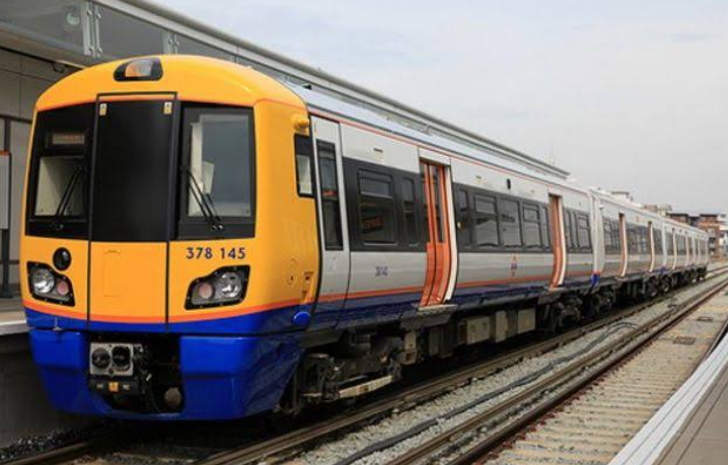
Introduction
When I first started using the London Overground, it felt like a practical alternative to the Underground. Today, after researching its history and seeing how the network has evolved, I understand why it became one of the most important transport success stories in the UK.
The headline achievement is remarkable: London Overground reached one billion customer journeys in November 2017, just 10 years after Transport for London took over the Silverlink Metro services in 2007. What began as a relatively modest network has grown into the third-largest rail operator in the UK, connecting communities across inner London and beyond.
In this article, I’ll explain how the network expanded, what improvements made the biggest difference for passengers, and why the London Overground remains a model for modern urban rail travel.
Overview
The London Overground reached one billion customer journeys in November 2017, just 10 years after taking over the Silverlink Metro services in 2007. By 2026, the orbital network has grown into the third-largest rail operator in the UK, carrying tens of millions of passengers every year.
To make the system easier to navigate, Transport for London officially renamed its six routes into distinct, color-coded lines:
Windrush line
East London corridor
Highbury & Islington to Clapham Junction / West Croydon / Crystal Palace / New Cross
Mildmay line
North & west orbital
Stratford to Richmond / Clapham Junction
Suffragette line
Barking Riverside route
Gospel Oak to Barking Riverside
Lioness line
Watford route
Euston to Watford Junction
Weaver line
Lea Valley services
Liverpool Street to Chingford / Enfield Town / Cheshunt
Liberty line
Local shuttle
Romford to Upminster
You can plan your next trip and check live arrival times using the TfL Journey Planner.
How London Overground Started in 2007
The network launched in 2007 when TfL took responsibility for several suburban rail routes. The original network included:
- Stratford to Richmond
- Willesden Junction to Clapham Junction
- Euston to Watford Junction
- Gospel Oak to Barking
At the time, few people predicted how quickly the service would grow. In my experience researching London transport history, the key difference was that TfL treated these routes as part of an integrated city network rather than isolated suburban lines.
The Expansion That Changed Everything
Over the next decade, three major extensions transformed the network:
2010
East London line extension
This connected more communities across east and south London and dramatically increased passenger demand.
2012
South London line extension
The new link improved orbital travel, allowing passengers to avoid central London for many journeys.
2015
West Anglia lines added
Services from Liverpool Street to destinations including Romford and Upminster became part of the London Overground family.
These additions helped create a genuine orbital railway around inner London, serving 23 London boroughs and parts of southern Hertfordshire.
One Billion Journeys: Why It Matters
Reaching one billion journeys in just 10 years was more than a symbolic milestone.
It showed that passengers were choosing the Overground because it solved real travel problems:
- Faster orbital journeys
- Better connections with the Underground
- More reliable services
- Modern stations and trains
- Simpler ticketing through Oyster and contactless payments
Passenger numbers grew from 33 million in 2008/09 to more than 189 million in 2016/17, an extraordinary increase in less than a decade.
The Improvements Passengers Actually Notice
After comparing the network before and after TfL’s investment, several upgrades stand out.
More Frequent Trains
Daily services increased from around 400 trains in 2007 to nearly 1,500 trains in 2017.
For commuters, this meant shorter waiting times and more flexibility.
Fewer Delays
Delays were reduced by more than one third compared with 2007/08 levels.
Reliability is often the most important factor for regular travellers, and this improvement helped build public trust.
Higher Customer Satisfaction
The network achieved an 85% customer satisfaction score in the first quarter of 2017/18, its highest level at the time.
Better Accessibility
Roughly half of the 112 stations became step-free from street to platform, and a turn-up-and-go service was introduced for customers with reduced mobility.
Safer Stations
All stations were staffed from the first train to the last train, improving security and customer support.
New Stations That Opened Up London
One of the most interesting findings from my research was how new stations helped regenerate local areas.
Notable examples include:
- Hoxton
- Imperial Wharf
- Dalston Junction
These stations improved access to homes, businesses, and cultural venues, helping neighborhoods become better connected to the rest of the capital.
Modern Trains and Extra Capacity
The rolling stock upgrade was another major success.
TfL introduced:
- 65 new walk-through, air-conditioned trains
- Fifth-car additions on many services
- 25% more capacity on upgraded trains
For anyone who has travelled during peak hours, that extra space can make a significant difference.
Places You Can Easily Visit by Overground
To celebrate the anniversary, TfL published an “Out and about on the London Overground” guide featuring attractions accessible by the network.
Highlights included:
- Crystal Palace Park
- Warner Bros. Studio Tour London
- V&A Museum of Childhood
In my experience, this is one of the network’s underrated advantages: it connects not only commuters but also tourists and day-trippers.
Future Projects That Continued the Growth
The anniversary announcement also highlighted several future investments.
Barking Riverside Extension
The extension from Gospel Oak to Barking Riverside was designed to support 10,800 new homes by 2021.
Electrification
The Gospel Oak–Barking route was upgraded for longer, cleaner, and more reliable electric trains with space for roughly twice as many passengers.
New Fleet for West Anglia Routes
TfL announced 45 new air-conditioned walk-through trains to replace older rolling stock on services from Liverpool Street and the Romford–Upminster route.
Technology and Journey Planning
One practical improvement I appreciate is the integration with TfL’s digital tools.
All routes are connected to:
- Real-time arrival information
- Journey Planning tools
- Live service updates
For visitors unfamiliar with London, these tools make navigating the network much less intimidating.
Why the Route Names Matter Today
By 2026, TfL had introduced distinct route names such as the Windrush line, Mildmay line, Suffragette line, Lioness line, Weaver line, and Liberty line.
From a passenger perspective, this was a smart move. Instead of thinking about one large orange network, travellers can now identify their specific route more easily, much like individual Underground lines.
What I Learned from Researching London Overground
If I had to summarize the biggest lesson, it would be this:
Successful public transport isn’t just about building new tracks. It’s about improving reliability, accessibility, frequency, and ease of use at the same time.
London Overground achieved all four.
That combination helped transform a collection of suburban rail routes into one of the UK’s most popular and dependable rail networks.
Conclusion
The story of London Overground’s first 10 years is a story of transformation. Starting in 2007 with the former Silverlink Metro routes, the network expanded across London, introduced modern trains, improved accessibility, reduced delays, and ultimately reached one billion customer journeys by 2017.
What makes this achievement especially impressive is that the improvements were not just statistical. Passengers experienced shorter waits, better connections, safer stations, and easier travel across the capital.
Whether you’re a daily commuter, a visitor exploring London, or someone interested in urban transport planning, the London Overground offers a clear example of how sustained investment and customer-focused improvements can completely reshape a city’s rail network.
And in my experience, that’s why its 10-year celebration was more than an anniversary—it was proof that thoughtful transport planning can genuinely change how millions of people move around a city.