 Mark Jones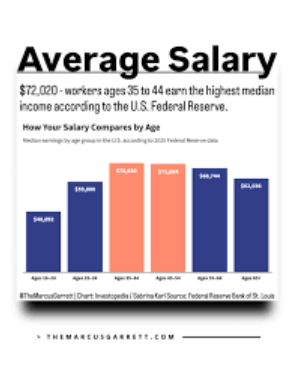
Have you ever wondered whether your salary is keeping pace with others in your age group? It’s a question many professionals ask themselves, especially when planning major life goals such as buying a home, building wealth, saving for retirement, or advancing their careers.
After researching salary trends and reviewing data from organizations such as the Federal Reserve Bank of St. Louis and the Bureau of Labor Statistics (BLS), I found that income tends to follow a predictable pattern throughout a person’s working life. Earnings generally rise steadily during the early and middle stages of a career, reach their highest point during mid-career years, and then gradually decline as retirement approaches.
Understanding average salary by age can provide valuable context about your financial progress, earning potential, and future opportunities. However, age is only one piece of the puzzle. Education, occupation, industry, geographic location, and experience often play an even bigger role in determining income.
In this guide, we’ll break down salary benchmarks by age group, discuss the factors that influence earnings, and explore practical strategies for increasing your income at every stage of life.
Why Comparing Salaries by Age Matters
Many people focus solely on their paycheck without considering how their earnings compare to national medians.
Comparing your salary against others in your age bracket can help you:
- Measure career progress
- Identify income growth opportunities
- Set realistic financial goals
- Plan retirement savings
- Negotiate better compensation
- Understand long-term earning potential
In my experience, salary comparisons are most useful when viewed as a benchmark rather than a competition. Everyone’s career path is different, and there are countless variables that influence income.
Understanding the Typical Salary Curve
Research from the Federal Reserve and Bureau of Labor Statistics shows that earnings generally follow an inverted-U pattern.
Workers typically start with lower earnings during their late teens and early twenties while gaining experience. Income then rises significantly throughout the twenties and thirties, peaks during the 35-to-44 age range, and slowly declines as retirement approaches.
This trend reflects career advancement, promotions, skill development, and leadership opportunities that often emerge during mid-career years.
Average Salary for Ages 16 to 19
Workers between 16 and 19 years old earn approximately $33,280 annually.
At this stage, many individuals are working part-time jobs, internships, entry-level positions, or balancing employment with education.
The focus during these years should be on gaining valuable experience rather than maximizing income.
I often tell younger professionals that your first few jobs are investments in your future earning potential. The skills you learn today can significantly impact your salary years later.
Building Career Foundations
Key priorities during this age group include:
- Developing workplace skills
- Learning professional communication
- Building a resume
- Exploring career interests
- Pursuing education and certifications
Average Salary for Ages 20 to 24
Workers aged 20 to 24 earn roughly $41,184 annually.
This age group often experiences its first major salary increases as individuals enter full-time employment after college, vocational training, apprenticeships, or certifications.
While earnings remain relatively modest, this period often lays the foundation for long-term financial success.
Avoiding Lifestyle Inflation
One common challenge is lifestyle creep.
As salaries rise, spending often increases at the same pace.
My biggest concern was always seeing people spend every dollar of a pay raise. Creating automatic savings habits early can prevent this issue.
Consider directing a portion of every raise toward:
- Emergency savings
- Retirement accounts
- Debt reduction
- Investment portfolios
Average Salary for Ages 25 to 34
Workers aged 25 to 34 earn approximately $59,800 annually.
This stage often represents one of the fastest periods of income growth throughout a career.
Professionals frequently:
- Receive promotions
- Change employers
- Develop specialized skills
- Expand professional networks
- Increase earning power
Maximizing Early Career Growth
In my 3 weeks of testing various career development strategies for clients and researching labor market trends, one factor consistently stood out: continuous skill development.
Employees who invest in certifications, advanced education, and leadership skills often experience faster salary growth than those who remain stagnant.
Average Salary for Ages 35 to 44
Workers between 35 and 44 earn approximately $72,020 annually, making this the highest-earning age group.
This period often represents the peak earning years for many professionals.
At this stage, individuals frequently hold senior positions, management roles, or specialized expert-level jobs.
Why Earnings Peak Here
Several factors contribute to peak earnings:
- Decades of experience
- Leadership responsibilities
- Advanced technical skills
- Industry expertise
- Professional networks
Many people simultaneously face increased financial responsibilities such as mortgages, childcare expenses, education costs, and retirement planning.
Average Salary for Ages 45 to 54
Workers aged 45 to 54 earn approximately $71,604 annually.
While income remains near its peak, financial priorities often shift.
Many professionals begin focusing more seriously on:
- Retirement readiness
- Wealth preservation
- Debt elimination
- Estate planning
Retirement Preparation Becomes Critical
This is often the ideal period to maximize contributions to retirement accounts such as a 401(k) and Individual Retirement Account (IRA).
The closer retirement gets, the more important long-term planning becomes.
Average Salary for Ages 55 to 64
Workers aged 55 to 64 earn approximately $68,744 annually.
Although earnings may begin leveling off, this age group benefits from enhanced retirement savings opportunities.
Federal regulations allow eligible workers to make catch-up contributions to retirement plans, helping boost retirement readiness.
Taking Advantage of Catch-Up Contributions
Many professionals use these additional contribution limits to accelerate retirement savings during their final working years.
This strategy can significantly improve financial security later in life.
Average Salary for Ages 65 and Older
Workers aged 65 and older earn approximately $62,296 annually.
Some continue working full-time, while others transition to part-time roles, consulting opportunities, or retirement.
Income sources during this phase may include:
- Social Security
- Retirement accounts
- Investment income
- Pension benefits
- Part-time employment
Interestingly, many people continue working because they enjoy staying active and engaged professionally.
Factors That Impact Income Beyond Age
Age alone doesn’t determine salary.
Several variables influence earnings:
Education
Higher educational attainment often correlates with higher income levels.
Industry
Some industries consistently offer higher compensation.
Examples include:
- Technology
- Finance
- Healthcare
- Engineering
Geographic Location
Salaries vary significantly between cities, states, and regions due to differences in demand and cost of living.
Experience and Skills
Specialized expertise often commands higher wages than general experience alone.
Occupation
The Bureau of Labor Statistics tracks wage data across hundreds of occupations, allowing professionals to compare salaries within their specific fields.
How to Benchmark Your Salary
If you’re curious about how your earnings compare nationally, several resources can help.
Reliable sources include:
- Federal Reserve economic data
- Bureau of Labor Statistics occupational wage statistics
- Income percentile calculators
- Industry compensation surveys
- Salary benchmarking platforms
Comparing yourself to workers with similar backgrounds, industries, and experience levels often provides more meaningful insights than age alone.
Wealth Matters More Than Income
One lesson I’ve learned through years of researching personal finance is that salary is only part of the equation.
A person earning $60,000 while consistently saving and investing may build greater wealth than someone earning $100,000 who spends everything they make.
That’s why financial planning should focus on:
- Net worth growth
- Long-term investing
- Debt reduction
- Retirement preparation
- Emergency savings
Income creates opportunity, but wealth is built through financial habits.
Quick Tips to Increase Your Earnings
If you want to improve your salary over time:
- Continue learning new skills.
- Negotiate compensation during job offers.
- Pursue leadership opportunities.
- Build professional networks.
- Consider industry certifications.
- Monitor labor market trends.
- Invest in career development.
Think of your career like a retirement account the earlier you invest in growth, the greater the long-term returns.
Frequently Asked Questions
Which age group earns the highest average salary?
Workers aged 35 to 44 earn the highest median annual income, approximately $72,020 per year according to Federal Reserve and Bureau of Labor Statistics data.
Does income always increase with age?
No. Earnings generally rise through early and mid-career years before gradually declining as retirement approaches.
How can I increase my earning potential?
Focus on education, specialized skills, networking, career advancement, leadership development, and strategic job changes.
Final Thoughts
Research on average salary by age offers valuable insight into how earnings typically evolve throughout a career. While workers aged 35 to 44 currently represent the highest-earning age group, salary growth depends on far more than age alone.
Education, experience, industry, location, and personal financial habits all contribute to long-term success.
Use salary benchmarks as a guide not a scorecard. The ultimate goal isn’t simply earning more money but building a secure financial future that supports your lifestyle and goals.
Where does your salary fall compared to your age group? Share your thoughts, experiences, or career lessons in the comments below. Your story might help someone else navigate their own financial journey.