
 Elsa Addison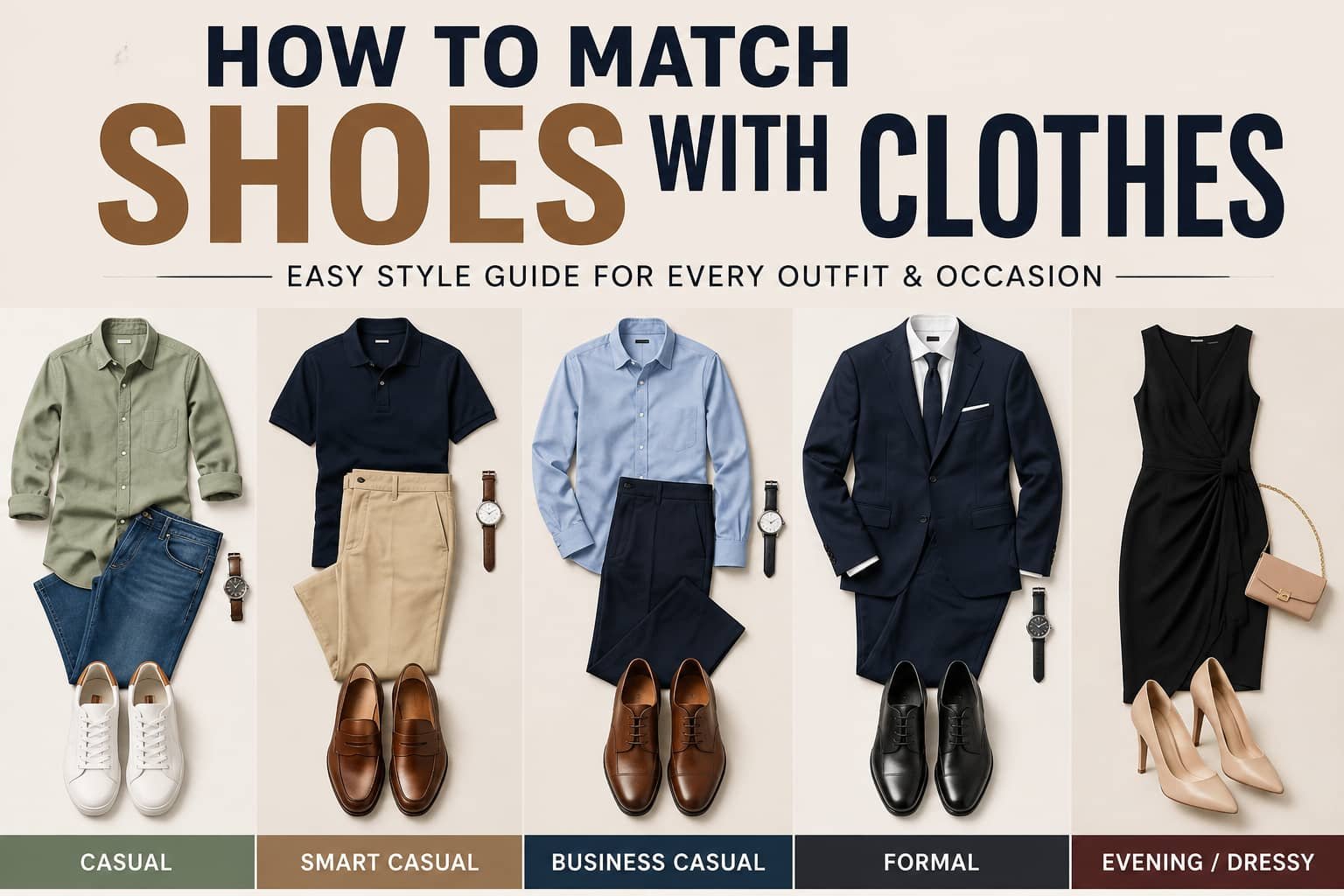
A few years ago, I spent nearly an hour putting together what I thought was the perfect outfit for a dinner event. The shirt fit perfectly, the trousers were tailored, and the accessories looked great. Then I looked in the mirror one last time before leaving.
Something felt off.
The culprit? My shoes.
I had paired sporty sneakers with an outfit that clearly needed loafers or dress shoes. That experience taught me something fashion experts have known for decades: shoes aren’t just accessories—they’re one of the most important parts of an outfit.
In fact, many stylists believe people subconsciously notice footwear before almost anything else. Shoes can elevate a simple look, balance proportions, add personality, or completely ruin an otherwise polished appearance.
If you’ve ever stood in front of your closet wondering which shoes work with which clothes, you’re not alone. In this guide, I’ll share practical strategies, real-world examples, and lessons I’ve learned through years of experimenting with outfits, brands, and style combinations.
By the end, you’ll know exactly how to match shoes with clothes confidently—whether you’re dressing casually, professionally, or somewhere in between.
Why Shoe Matching Matters
Before diving into specific combinations, it’s important to understand why shoe selection affects an outfit so much.
Shoes create visual balance. They also communicate:
- Formality level
- Personal style
- Attention to detail
- Fashion awareness
- Practicality
Think of shoes as the foundation of your outfit. Just like a house needs a solid foundation, your clothing choices need footwear that supports the overall look.
See More: How to Dress Classy on a Budget
The Three Rules I Always Follow
When matching shoes with clothes, I use three simple rules:
1. Match the Formality
One of the biggest mistakes people make is mixing dramatically different dress levels.
Examples:
Good Match
- Oxford shoes + suit
- Loafers + chinos
- Clean white sneakers + jeans
Poor Match
- Running shoes + business suit
- Hiking boots + formal dress
- Patent leather shoes + gym wear
The closer the formality levels are, the better the outfit looks.
2. Coordinate Colors
Color harmony is often more important than exact matching.
Instead of obsessing over perfect color matches, focus on complementary tones.
Examples:
| Clothing Color | Shoe Colors That Work Well |
|---|---|
| Navy | Brown, tan, white, burgundy |
| Black | Black, white, gray |
| Gray | Black, brown, white |
| Beige | Brown, tan, white |
| Olive | Brown, tan, dark burgundy |
In my experience, neutral-colored shoes are the easiest to style because they work with multiple outfits.
3. Consider the Season
Certain shoes naturally belong in certain seasons.
Spring/Summer
- White sneakers
- Canvas shoes
- Loafers
- Espadrilles
Fall/Winter
- Leather boots
- Chelsea boots
- Dark sneakers
- Brogues
Seasonal consistency helps an outfit feel intentional.
How to Match Shoes with Casual Clothes
Casual outfits offer the most flexibility.
White Sneakers: The Ultimate Style Cheat Code
If I could recommend only one shoe style for versatility, it would be clean white sneakers.
Brands such as Nike, Adidas, Converse, and New Balance all offer options that pair well with:
- Jeans
- Chinos
- Shorts
- Casual dresses
- Athleisure outfits
When I travel, white sneakers are usually the first shoes I pack because they work with almost everything.
Best Outfit Combinations
- White sneakers + blue jeans + t-shirt
- White sneakers + chinos + polo shirt
- White sneakers + casual blazer
The key is keeping them clean.
Nothing ruins a stylish outfit faster than dirty white shoes.
Matching Sneakers with Jeans
Jeans are one of the easiest clothing items to style.
Dark Wash Jeans
Best paired with:
- White sneakers
- Brown boots
- Chelsea boots
- Loafers
Light Wash Jeans
Best paired with:
- White sneakers
- Gray sneakers
- Casual loafers
I usually avoid extremely formal shoes with light-wash denim because the contrast feels awkward.
How to Match Shoes with Business Casual Outfits
Business casual can be tricky because it sits between formal and relaxed.
Loafers: The Perfect Middle Ground
Loafers bridge the gap beautifully.
They work with:
- Chinos
- Tailored trousers
- Polo shirts
- Oxford shirts
- Lightweight blazers
Brown loafers are particularly versatile.
I’ve worn them to client meetings, dinners, and weekend events with equal success.
Best Shoe Colors for Business Casual
Brown Shoes
Work best with:
- Navy pants
- Khaki chinos
- Gray trousers
- Olive pants
Black Shoes
Work best with:
- Charcoal trousers
- Black pants
- Dark gray suits
As a general rule, brown feels more approachable while black feels more formal.
How to Match Shoes with Formal Clothing
Formal wear follows stricter rules.
Fortunately, once you know them, dressing becomes easier.
Matching Dress Shoes with Suits
Navy Suit
Best shoe choices:
- Brown Oxford shoes
- Dark brown brogues
- Burgundy leather shoes
Gray Suit
Best shoe choices:
- Black dress shoes
- Brown dress shoes
- Burgundy shoes
Black Suit
Best shoe choice:
- Black dress shoes
This is one of the few style rules I rarely break.
Black suits almost always look best with black shoes.
Don’t Forget the Belt Rule
One classic guideline still works today:
Match your belt color closely to your shoe color.
Examples:
- Brown shoes → Brown belt
- Black shoes → Black belt
This small detail creates a more polished appearance.
Matching Shoes with Dresses and Skirts
Footwear dramatically changes the mood of dresses and skirts.
For Casual Dresses
Great options include:
- White sneakers
- Flat sandals
- Espadrilles
These create a relaxed and modern appearance.
For Elegant Dresses
Choose:
- Heels
- Pointed-toe pumps
- Dressy sandals
A useful trick is letting your dress be the focal point while keeping shoes in complementary tones.
Common Shoe Matching Mistakes
After years of experimenting, these are the mistakes I see most often.
Wearing Worn-Out Shoes
Even expensive shoes look bad when they’re damaged.
Check regularly for:
- Scuffs
- Dirt buildup
- Worn soles
- Creases
Good maintenance instantly improves style.
Matching Everything Exactly
Many people try to match every item perfectly.
Fashion generally looks better with coordination rather than exact duplication.
Instead of matching every color, use complementary shades.
Ignoring Proportions
Chunky shoes with slim clothing can look unbalanced.
Likewise, delicate shoes can get visually lost under oversized garments.
Always consider overall proportions.
A Real-Life Style Experiment That Changed My Approach
A few years ago, I challenged myself to build outfits around only three pairs of shoes:
- White leather sneakers
- Brown loafers
- Brown Chelsea boots
For an entire month, I rotated those shoes with different clothing combinations.
The result surprised me.
Almost every outfit worked.
What I learned was that versatility matters more than quantity. Instead of owning dozens of trendy shoes, investing in a few quality, adaptable pairs often creates better style outcomes.
That lesson has saved me money and simplified getting dressed every morning.
Quick Shoe Matching Cheat Sheet
When in doubt:
Wear White Sneakers With:
- Jeans
- Chinos
- Shorts
- Casual dresses
Wear Loafers With:
- Chinos
- Tailored trousers
- Smart casual outfits
Wear Chelsea Boots With:
- Dark jeans
- Wool trousers
- Layered fall outfits
Wear Dress Shoes With:
- Suits
- Formal business attire
- Weddings
- Professional events
Frequently Asked Questions
What color shoes go with everything?
White, black, brown, and tan are the most versatile shoe colors. White sneakers, in particular, pair well with most casual outfits.
Can I wear black shoes with navy clothes?
Yes. Black shoes work with navy clothing, especially in formal settings. However, brown shoes often create a more stylish and modern appearance with navy outfits.
Should shoes be lighter or darker than pants?
Generally, shoes should be the same shade or darker than pants. This creates a cleaner visual flow and tends to look more balanced.
Can I wear sneakers with business casual outfits?
Absolutely. Clean, minimalist sneakers can work well with business casual clothing, especially in modern workplaces. Avoid athletic running shoes and choose sleek leather or premium casual sneakers instead.
How many pairs of shoes do I really need?
Most people can build dozens of outfits with just three to five versatile pairs:
- White sneakers
- Brown loafers
- Black dress shoes
- Brown boots
- Casual everyday sneakers
Conclusion
Learning how to match shoes with clothes isn’t about memorizing hundreds of fashion rules. It’s about understanding balance, color coordination, formality, and personal style.
In my experience, the best outfits usually come from simple combinations executed well. A clean pair of sneakers, quality loafers, or polished boots often outperform trendy footwear that doesn’t fit the overall look.
Start with versatile shoe colors, pay attention to occasion and season, and don’t be afraid to experiment. Some of my favorite outfit combinations came from trying something slightly outside my comfort zone.
Fashion should make life easier—not more complicated. Once you understand the fundamentals of matching shoes with clothes, getting dressed becomes faster, more enjoyable, and far more confident.
What shoe-and-outfit combination do you wear most often? You might be surprised how much your answer reveals about your personal style.


 Mark Jones