 Mark Jones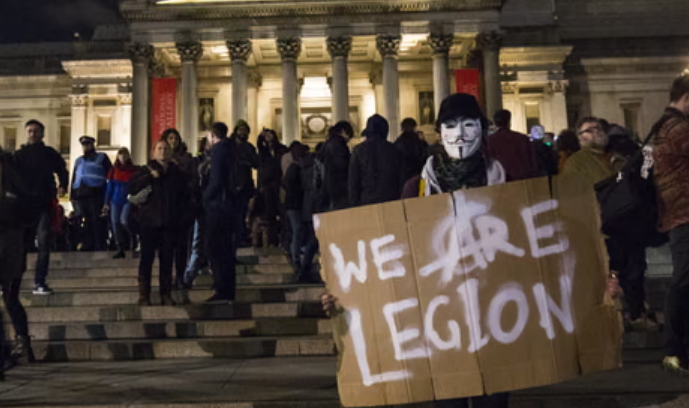
Overview
The Metropolitan Police frequently impose strict conditions on the annual Million Mask March under the Public Order Act. These operational measures have historically included:
- Strict Time Limits: Demonstrations are heavily restricted to a 3-hour window, typically between 6:00 PM and 9:00 PM.
- Designated Routes: Marchers must stick to a legally prescribed route, usually running between Parliament Square, Whitehall, and Trafalgar Square.
- Mask Removal Powers: Under Section 60AA of the Criminal Justice and Public Order Act, officers are granted powers to order protesters to remove face coverings in designated areas.
- Heavy Deployments: Thousands of officers, including riot police and mounted units, are deployed to manage crowds and prevent the type of violence and property damage seen in previous years.
Failure to comply with these restrictions constitutes a public order offence and may result in immediate arrest.
You can learn more about enforcement practices through reports covering the Million Mask March and official public order legislation guidance published by UK authorities.
Million Mask March Prompts Met Police Disorder Fears
Every year, thousands of activists, campaigners, and protesters gather in London for the Million Mask March, one of the most recognizable anti-establishment demonstrations in the United Kingdom. Known for its sea of Guy Fawkes masks, connections to the Anonymous movement, and strong messages against government surveillance, the annual protest continues to spark debate about freedom, security, and public order.
In this article, I’ll explore why the Metropolitan Police often express concerns about potential disorder during the march, what restrictions are typically imposed, the role of Anonymous UK, and why issues such as civil liberties, internet privacy, and government accountability remain central to the event.
Having followed public demonstrations and digital rights campaigns for years, I’ve found the Million Mask March particularly fascinating because it sits at the crossroads of political activism, public safety, and modern surveillance debates.
What Is the Million Mask March?
The Million Mask March is an annual protest movement that takes place in London and numerous cities around the world. Participants commonly wear the iconic Guy Fawkes mask associated with Anonymous, the international activist and hacktivist collective.
The demonstration originally gained popularity as a platform for people concerned about:
- Government cuts
- Civil liberties
- Mass surveillance
- Internet censorship
- Government accountability
- Freedom of expression
- Digital privacy rights
The event is often held around Guy Fawkes Night, giving the mask additional symbolic significance.
While many attendees participate peacefully, authorities have frequently expressed concerns about the potential for public disorder, property damage, and clashes with police.
Why the Met Police Have Raised Disorder Fears
The Metropolitan Police Service regularly conducts risk assessments before major demonstrations. In the case of the Million Mask March, officials have occasionally warned that some individuals may attend with intentions that extend beyond peaceful protest.
Chief Superintendent Pippa Mills previously highlighted concerns regarding public safety and the possibility of disorder during the event. Such warnings are often based on intelligence assessments, previous incidents, and crowd management considerations.
From a policing perspective, large gatherings in central London present unique challenges:
- Managing thousands of participants
- Protecting public spaces
- Preventing criminal damage
- Maintaining traffic flow
- Ensuring public safety
- Balancing protest rights with law enforcement responsibilities
This balancing act often fuels debate among activists and civil liberties groups.
The Role of the Public Order Act
One of the most significant legal tools available to police is the Public Order Act.
Under this legislation, authorities can impose conditions on demonstrations when they believe there is a serious risk of:
- Public disorder
- Property damage
- Serious disruption
- Community intimidation
In practical terms, this means police can regulate how a protest takes place without necessarily preventing it altogether.
For supporters of civil rights, these restrictions can feel like limitations on freedom of assembly. For law enforcement, they are viewed as necessary measures to maintain public safety.
Restrictions Commonly Imposed on the Million Mask March
Strict Time Limits
One of the most common conditions is limiting the demonstration to a specific timeframe.
Historically, participants have been instructed that marches must not begin before 6:00 PM and should conclude by 9:00 PM.
These restrictions help authorities allocate resources and reduce disruption across central London.
Designated Protest Routes
Marchers are often required to follow a prescribed route.
The route typically connects key political landmarks, including:
- Parliament Square
- Whitehall
- Trafalgar Square
By controlling movement, police can better manage crowd safety while minimizing disruption to businesses, tourists, and local residents.
Face Covering Removal Powers
A particularly controversial issue involves police powers relating to masks.
Under Section 60AA of the Criminal Justice and Public Order Act, officers may require individuals to remove face coverings within designated areas.
Since the Guy Fawkes mask is a defining symbol of the Million Mask March, this measure frequently generates criticism from activists who view anonymity as a form of protection against retaliation or surveillance.
Why Surveillance Concerns Remain Central to the Protest
One of the strongest themes running through the Million Mask March is opposition to what participants describe as the growth of a surveillance state.
Protesters often express concerns about:
- Government monitoring programs
- Internet surveillance
- Data collection practices
- Online privacy erosion
- Digital tracking technologies
Many campaigners argue that technological advancements have expanded the ability of governments and corporations to monitor citizens’ activities.
As someone who has researched privacy issues extensively, I’ve noticed that concerns about digital freedoms have only intensified over the last decade. Whether discussing social media data collection or online tracking, many citizens feel privacy has become increasingly difficult to protect.
Anonymous UK and the Global Activist Movement
Anonymous UK plays a prominent role in promoting awareness of the Million Mask March.
The broader Anonymous movement emerged as a decentralized network of activists focused on issues such as:
- Internet freedom
- Transparency
- Anti-corruption efforts
- Digital rights
- Free speech advocacy
Unlike traditional organizations, Anonymous operates without formal leadership structures.
This decentralized nature has helped the movement attract participants from diverse political backgrounds while making it difficult to categorize.
The Guy Fawkes mask has become one of the most recognizable symbols of modern political activism worldwide.
International Reach of the Million Mask March
Although London hosts one of the largest demonstrations, the Million Mask March has become a global event.
Past demonstrations have been reported in countries including:
- Cambodia
- Chile
- Canada
- United States
- Mexico
This international participation reflects growing global concern about surveillance, privacy rights, and government accountability.
Different countries often emphasize different issues, but the underlying themes of freedom and transparency remain consistent.
Previous Arrests and Public Order Incidents
The Metropolitan Police frequently cite previous incidents when planning for future demonstrations.
In past years, thousands gathered in Parliament Square and Trafalgar Square, with some arrests made on suspicion of public order offences.
While most participants attend peacefully, isolated incidents involving disorder can shape future policing strategies.
This creates an ongoing cycle where increased restrictions generate criticism, while authorities argue that such measures are justified by previous experiences.
The Ongoing Debate: Security Versus Civil Liberties
Perhaps the most important issue surrounding the Million Mask March is the broader question of balancing public safety with democratic freedoms.
Supporters of stricter policing argue that:
- Public spaces must remain safe
- Criminal activity should be prevented
- Property damage must be avoided
- Citizens deserve protection from disorder
Meanwhile, activists argue that:
- Freedom of assembly is a fundamental right
- Protest should remain accessible
- Surveillance powers require scrutiny
- Governments should be held accountable
In my experience following public policy debates, neither side sees the issue as simple. Most people agree that both safety and civil liberties matter. The challenge lies in finding the right balance.
Why the Million Mask March Continues to Matter
The Million Mask March remains relevant because it reflects some of the most significant political and technological questions facing modern societies.
As governments expand digital capabilities and citizens become increasingly concerned about privacy, protests focused on surveillance and civil liberties are unlikely to disappear.
Whether one supports the movement or not, the march serves as an important reminder that debates about freedom, security, transparency, and accountability remain central to democratic societies.
Quick Takeaways
- The Million Mask March is an annual anti-establishment protest linked to Anonymous.
- London hosts one of the largest demonstrations.
- The Metropolitan Police regularly impose conditions under the Public Order Act.
- Common restrictions include time limits, designated routes, and mask removal powers.
- Civil liberties, internet freedom, and government surveillance remain key themes.
- Demonstrations also occur internationally, including in Canada, Chile, Mexico, Cambodia, and the United States.
- The event highlights the ongoing tension between public order and democratic freedoms.
Frequently Asked Questions
What is the Million Mask March?
The Million Mask March is an annual protest advocating for civil liberties, government accountability, internet freedom, and opposition to surveillance measures.
Why do protesters wear Guy Fawkes masks?
The masks symbolize resistance to perceived government overreach and are closely associated with the Anonymous activist movement.
Can police require protesters to remove masks?
Yes. Under certain legal powers, including Section 60AA of the Criminal Justice and Public Order Act, officers may require individuals to remove face coverings in designated areas.
Final Thoughts
The Million Mask March continues to attract attention because it raises difficult questions about privacy, protest rights, surveillance, and public safety. Whether viewed as a powerful expression of civic activism or a challenging policing operation, the event remains one of the UK’s most talked-about annual demonstrations.
What are your thoughts on the balance between civil liberties and public order? Do you believe stricter protest conditions are necessary, or should demonstrations face fewer restrictions? Share your perspective and join the discussion.