 Elsa Addison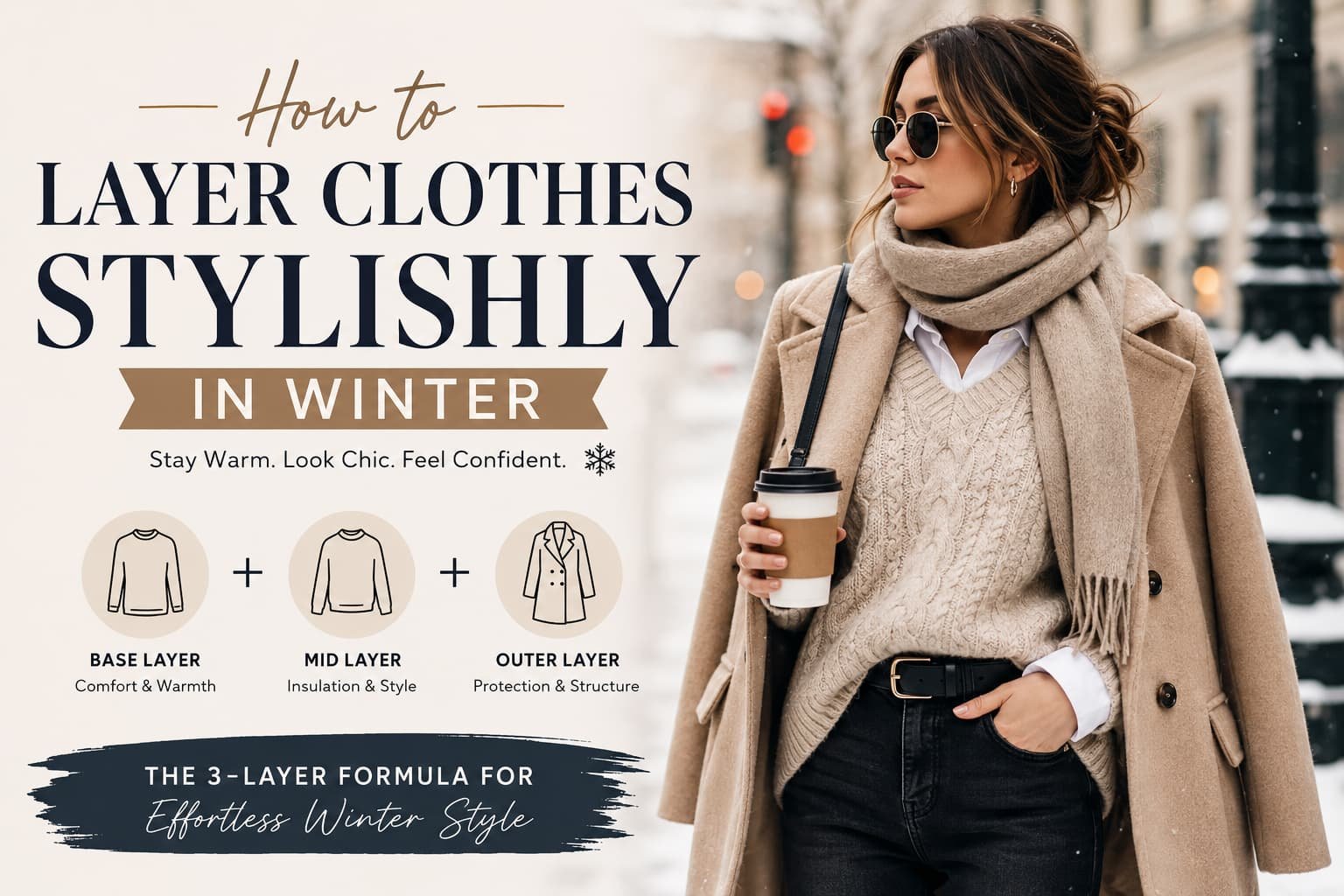
I still remember standing in front of my wardrobe on a cold winter morning, trying on outfit after outfit and still feeling like something was “off.” Either I looked too bulky, too plain, or just uncomfortable.
The truth is, winter layering is not about wearing more clothes, it’s about wearing them smartly.
In my experience, once you understand the logic behind layering, getting dressed becomes effortless. You don’t need a huge wardrobe, you just need the right system.
That’s exactly what I want to break down here: a practical, stylish, real-world approach to how to layer clothes stylishly in winter without losing comfort or shape.
AI Overview: The Simple Formula Behind Stylish Winter Layering
Layering for winter comes down to a simple formula:
- A sleek moisture-wicking base
- An insulating mid-layer
- A structured outer shell
To stay stylish without looking bulky, the key is:
- Mixing textures (like cashmere + denim)
- Balancing volumes (tight bottoms with oversized coats)
- Using fitted thermals for warmth without bulk
Now let’s turn this into a real styling system you can actually use every day.
Read More: How to Style Oversized T-Shirts for Women
The Ultimate 3-Layer Formula (That Actually Works in Real Life)
1. Base Layer: Your Second Skin
This is where everything begins.
Your base layer sits directly on your skin, so it must be:
- Thin
- Breathable
- Warm
- Moisture-controlling
In my experience, cotton is not ideal here because it traps moisture. Instead, I rely on:
- Merino wool thermals
- Lightweight turtlenecks
- Bodysuits
- Heat-tech style fabrics like Uniqlo
Why it matters:
A good base layer keeps you warm without adding visible bulk, which is the foundation of stylish layering.
2. Mid-Layer: The Style + Warmth Zone
This is where your outfit actually starts to look interesting.
Your mid-layer should provide insulation and personality.
Some of my go-to pieces:
- Cashmere sweaters
- Knitwear (fine or chunky depending on balance)
- Button-down shirts
- Blazers
- Sweater vests
- Fleece-lined tights under trousers
Personal insight:
I often treat this layer as the “visual focus” of the outfit. If it looks good here, everything else feels intentional.
3. Outer Layer: Structure and Protection
This is your final piece, the one everyone sees first.
Your outer layer should:
- Protect you from wind and cold
- Frame your outfit
- Fit comfortably over inner layers
Best choices include:
- Wool coats
- Trench coats
- Oversized structured coats
- Modern puffer jackets
- Leather jackets
Key rule:
Always size or style your outer layer so it doesn’t crush your inner outfit.
How to Layer Clothes Without Looking Bulky
This is the biggest challenge I’ve faced—and solved through trial and error.
Here’s what actually works:
1. Play with proportions
- Oversized top → slim bottoms
- Fitted top → wide-leg trousers or coats
This balance keeps your silhouette intentional.
2. Focus on fabric weight, not thickness
A fine knit can be warmer than a thick chunky sweater.
Best layering fabrics:
- Cashmere
- Merino wool
- Cotton jersey
- Fleece blends
3. Use strategic tucking
- Half-tuck base layers
- Full tuck for structure
- Let hems peek for dimension
This small detail makes a big difference.
How to Layer Dresses in Winter (Without Packing Them Away)
One of the most underrated winter styling tricks is keeping dresses in rotation.
Here’s how I personally style them:
Option 1: Turtleneck Under Dress
- Fitted turtleneck underneath
- Midi or sleeveless dress on top
- Boots + tights for warmth
Option 2: Knitwear Over Dress
- Oversized sweater over slip dress
- Let the hem peek out
- Add belt for waist definition
Option 3: Dress Over Trousers
- Slim trousers or jeans
- Slip dress as tunic
- Leather jacket for structure
This approach completely changes how you use your wardrobe.
Transitional Layering: Winter-to-Spring Logic
Even in winter, temperature changes throughout the day. I always build outfits that can adapt.
My layering strategy:
- Morning: full layers (base + mid + outer)
- Midday: remove outer layer
- Evening: add structure back
Key transitional pieces:
- Lightweight knits
- Denim jackets
- Trench coats
- Open cardigans
Texture Mixing: The Secret to Stylish Layering
If layering feels “flat,” texture is usually missing.
Here’s what works beautifully:
- Silk + wool
- Denim + cashmere
- Cotton + leather
- Satin + knitwear
Example combination:
A silk camisole under a wool cardigan with a leather jacket on top creates depth without effort.
Color Strategy for Effortless Winter Style
When I want my outfit to look instantly polished, I stick to tonal dressing.
Easy color formulas:
- Cream + beige + camel
- Grey + charcoal + black
- White + ivory + sand
Why it works:
It blends layers visually, making the outfit look intentional rather than stacked.
If you prefer color:
- Keep one bold piece
- Keep the rest neutral
Styling Tricks That Make Everything Look Intentional
These small adjustments completely change the outfit:
- Let shirt collars peek under sweaters
- Show base layer hems slightly
- Roll sleeves to reveal inner layers
- Add belts over knitwear for waist definition
- Use long necklaces to visually connect layers
Footwear & Final Touches (Often Overlooked)
1. Knee-high boots
These are one of my winter essentials. They:
- Add warmth
- Work under dresses or skirts
- Look sleek with slim jeans
2. Warm insoles
If you wear sneakers in winter:
- Swap insoles for fleece or sheepskin versions
- Keeps warmth without changing your outfit style
3. The belt trick
When layering hides your shape:
- Add a leather belt over knits or coats
- Instantly restores structure
Real-Life Layering Rule I Follow Every Day
After years of experimenting, I now follow one simple rule:
Every layer must either add warmth, structure, or style—but never just “exist.”
If a piece doesn’t serve one of those roles, I remove it.
That mindset alone makes layering much easier.
Conclusion:
Stylish winter layering is not about owning more clothes, it’s about understanding how each layer works together.
Once you follow the simple structure:
- Base = comfort
- Mid = personality
- Outer = protection
Everything becomes easier.
In my experience, the best outfits are not complicated, they’re intentional. And when your layering is intentional, you don’t just stay warm, you look confident without trying too hard.
Winter dressing stops feeling like a struggle and starts feeling like a creative system you actually control.

 Mark Jones