 Elsa Addison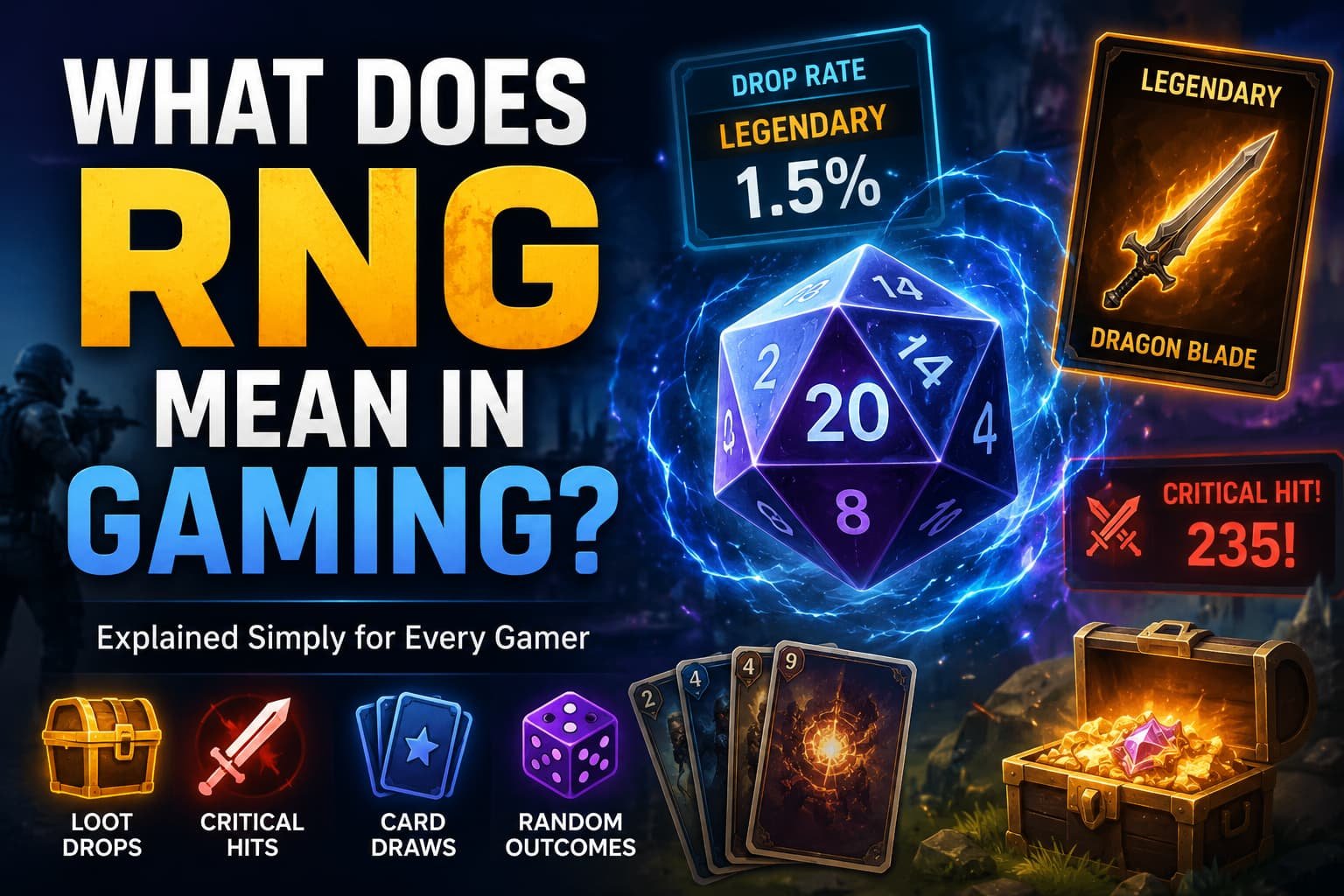
If you’ve spent any time playing video games, you’ve probably heard someone say, “That was just bad RNG,” or “I got lucky with the RNG.” But what does RNG actually mean in gaming, and why does it have such a huge impact on gameplay?
In this guide, I’ll explain what RNG means in gaming, how it works, why developers use it, and whether it’s good or bad for players. I’ll also share real-world gaming examples and insights that helped me better understand RNG across different genres.
Whether you play RPGs, shooters, card games, mobile games, or competitive esports titles, understanding RNG can make you a smarter player and help you make better decisions in-game.
What Does RNG Mean in Gaming?
RNG stands for Random Number Generator.
In gaming, RNG is a system that creates random outcomes. Developers use RNG to determine things such as:
- Loot drops
- Critical hits
- Enemy behavior
- Card draws
- Weapon accuracy
- Item crafting results
- Random encounters
- Procedural world generation
Simply put, RNG adds unpredictability to a game.
For example, imagine defeating the same boss ten times. If the boss always dropped the exact same item, every battle would feel predictable. RNG creates variation by randomly deciding what reward you receive.
This randomness keeps games fresh and encourages replayability.
See More: What Is the Highest Paid Sport in the World?
How RNG Works in Video Games
Despite the name “random,” most video games don’t generate truly random results.
Instead, they use mathematical algorithms known as pseudo-random number generators (PRNGs). These systems create sequences that appear random to players.
Here’s a simple example:
A game may generate a number between 1 and 100.
- 1–5 = Legendary item (5% chance)
- 6–20 = Rare item (15% chance)
- 21–50 = Uncommon item (30% chance)
- 51–100 = Common item (50% chance)
Every time you defeat an enemy, the game rolls this virtual dice.
The result determines what reward you receive.
As players, we only see the outcome—not the calculations happening behind the scenes.
Why Game Developers Use RNG
Many players wonder why developers rely on RNG at all.
The answer is simple: RNG helps create excitement and replay value.
Without randomness:
- Every match would feel identical.
- Loot systems would become predictable.
- Exploration would feel less rewarding.
- Long-term engagement would decrease.
In my experience, some of the most memorable gaming moments happened because of RNG.
Getting a legendary weapon when I least expected it or surviving a fight thanks to a lucky critical hit created stories I still remember years later.
Randomness often creates those unforgettable moments that scripted gameplay can’t.
Common Examples of RNG in Gaming
Loot Drops
Loot drops are one of the most recognizable forms of RNG.
Games like:
- Diablo
- Borderlands
- Destiny 2
- Path of Exile
all rely heavily on random loot systems.
A powerful item may only have a tiny chance of dropping.
This creates excitement because every enemy defeat could potentially reward something valuable.
I was skeptical at first, but after spending hours farming rare gear in RPGs, I realized RNG is often what keeps players coming back.
Critical Hits
Many RPGs use RNG to determine critical strikes.
For example:
- Normal attack = 100 damage
- Critical hit = 200 damage
- Critical chance = 15%
Every attack has a chance to become a critical hit.
Games such as Pokémon, Final Fantasy, and many MMORPGs use this system.
Card Draws
Digital card games depend heavily on RNG.
Popular examples include:
- Hearthstone
- Marvel Snap
- Legends of Runeterra
The order of your deck is randomized.
Sometimes you draw exactly what you need.
Sometimes you don’t.
That’s RNG at work.
Weapon Spread and Accuracy
First-person shooters often include RNG in weapon mechanics.
Examples include:
- Counter-Strike
- Apex Legends
- Fortnite
Bullet spread can vary slightly based on movement, recoil, and weapon design.
Even skilled players must account for these random elements.
Procedural Generation
Some games use RNG to generate entire worlds.
Examples include:
- Minecraft
- Terraria
- No Man’s Sky
- Hades
The random generation ensures that each playthrough feels different.
Good RNG vs Bad RNG
Not all RNG is created equal.
Players often distinguish between “good RNG” and “bad RNG.”
Good RNG
Good RNG enhances gameplay without removing player skill.
Examples include:
- Random loot rewards
- Different enemy spawns
- Unique dungeon layouts
- Optional bonus events
These systems create variety while allowing players to remain in control.
Bad RNG
Bad RNG can make players feel powerless.
Examples include:
- Losing due to unavoidable randomness
- Excessive loot grinding
- Random outcomes overriding skill
- Competitive systems that depend too heavily on luck
My biggest concern was always that RNG might reduce skill-based gameplay. However, the best game developers balance randomness with player decision-making.
When done correctly, RNG supports skill rather than replacing it.
RNG in Competitive Gaming
Competitive players often have mixed feelings about RNG.
In esports and ranked gameplay, players generally prefer systems that reward skill.
However, even highly competitive games include some randomness.
For example:
Battle Royale Games
Games like Fortnite and Apex Legends use RNG for:
- Weapon spawns
- Item locations
- Circle placement
Players must adapt to changing conditions.
Card Game Esports
Professional card players understand that RNG is part of the challenge.
The best players consistently win because they make strong decisions despite randomness.
This is why top competitors often focus on probability rather than luck.
Can RNG Be Manipulated?
This is a common question among gamers.
Generally, players cannot directly manipulate RNG.
However, many games include systems that improve odds over time.
Examples include:
Pity Systems
Many modern games use pity mechanics.
If a rare item doesn’t drop after multiple attempts, the game gradually increases your chances.
Popular in:
- Gacha games
- Mobile RPGs
- Character collection games
Luck Stats
Some games feature attributes that affect RNG.
Examples:
- Luck
- Magic Find
- Discovery
- Fortune
These stats can improve your odds of obtaining rare rewards.
RNG and Gacha Games
One of the most controversial uses of RNG appears in gacha games.
These games allow players to spend in-game currency for random rewards.
Examples include:
- Genshin Impact
- Honkai: Star Rail
- Wuthering Waves
Players often chase rare characters with very low drop rates.
Because real money can be involved, RNG becomes a much bigger discussion.
Understanding probability is especially important when playing these games.
How to Deal with RNG Frustration
Let’s be honest.
Everyone has experienced terrible RNG at some point.
Maybe you’ve:
- Missed a 95% accuracy shot.
- Farmed a boss 50 times.
- Lost a match due to unlucky card draws.
- Failed a rare crafting attempt.
I found one useful mindset shift: focus on decisions rather than outcomes.
Good players understand that they can’t control randomness.
They can only control how they respond to it.
When you think long-term, RNG tends to balance out over many matches or attempts.
RNG vs Skill: Which Matters More?
This depends on the game.
Some games are mostly skill-based.
Examples include:
- Chess-like strategy games
- Fighting games
- Tactical shooters
Other games intentionally combine skill and randomness.
The most successful games often strike a balance between both.
A skilled player should win more often than a beginner, even when RNG is present.
That’s usually the sign of a healthy game design.
In my experience, the best games use RNG to create interesting situations while still rewarding knowledge, strategy, and practice.
The Psychology Behind RNG
Game developers understand that uncertainty can be exciting.
Human brains naturally enjoy anticipation.
That’s why:
- Loot boxes feel exciting.
- Rare drops feel rewarding.
- Random rewards keep players engaged.
The anticipation of “what might happen next” creates powerful emotional engagement.
It’s similar to opening a mystery gift.
You never know exactly what you’ll get.
That uncertainty keeps players invested.
Quick Tips for Understanding RNG
If you’re new to gaming, keep these tips in mind:
- RNG does not mean the game is unfair.
- Random outcomes are usually based on probabilities.
- A low drop rate doesn’t guarantee quick rewards.
- Short-term results can feel unlucky.
- Long-term results often balance out.
- Focus on strategy instead of chasing perfect luck.
- Learn game-specific probability systems.
Frequently Asked Questions
Is RNG the same as luck?
Not exactly.
Luck is the player’s experience of a random outcome.
RNG is the system that generates that outcome.
Players describe the result as lucky or unlucky, but RNG is simply the mechanism behind it.
Why do gamers complain about RNG?
Gamers usually complain when randomness feels unfair or overrides skill.
If players lose despite making good decisions, frustration often follows.
Balanced RNG creates excitement, while excessive RNG can feel punishing.
Which games use the most RNG?
Games heavily reliant on RNG include:
- Diablo
- Path of Exile
- Hearthstone
- Genshin Impact
- Borderlands
- Pokémon
- Roguelike games
These titles use randomness extensively for loot, encounters, rewards, and progression.
Final Thoughts
So, what does RNG mean in gaming?
RNG stands for Random Number Generator, a system that creates random outcomes in video games. From loot drops and critical hits to card draws and world generation, RNG influences countless gaming experiences.
While some players love it and others hate it, RNG remains one of the most important mechanics in modern game design. When balanced correctly, it creates excitement, replayability, and memorable moments that keep games fresh for years.
Personally, I’ve found that understanding RNG makes gaming far less frustrating. Once you realize that randomness is part of the design—not a personal attack from the gaming gods—you can focus on improving your skills and enjoying the experience.
What are your thoughts on RNG? Have you ever experienced incredibly lucky—or unbelievably unlucky—moments in a game? Share your experiences and join the discussion in the comments.


 Mark Jones